Home Field postings Mold Remediation Guides
KPM Restoration (Mechanicville, NY) Mold Remediation: What to Verify Before Cleanup Starts
Use these mold-remediation decision questions—rooted in moisture-source thinking, containment, and documentation—to prepare a strong inspection and scope conversation with KPM Restoration.
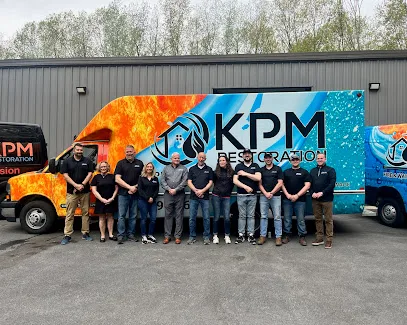
Mold remediation decisions in the Albany–Mechanicville area rarely hinge on visible growth alone. For homeowners, the most important early goal is to confirm the water source, document conditions, and ensure the cleanup plan is built around your specific rooms and materials—not around a generic “mold removal” promise. That mindset is especially relevant if you plan to work through insurance, because a clear inspection and reporting trail can matter as much as the physical cleanup.
This guide is written for property owners considering KPM Restoration for mold remediation and related water-damage response. Public information for this record lists KPM Restoration’s address at 5 Knabner Rd, Mechanicville, NY 12118, United States, phone +1 518-430-5168, and an official website at https://kpmrestoration.com/. It also describes the company as a mold remediation contractor, with a focus on containment and industry-standard protocols.
Start the call with the moisture story (not the mold)
When mold appears, the key decision is why moisture was present long enough for growth. Before anyone starts containment or debris removal, ask how they will identify the moisture source and what evidence they use to document it. In practice, that means discussing the timeline (when the leak or dampness started), where moisture traveled (for example, along walls, under flooring, or into HVAC components), and which building materials are likely affected.
Expect the technician conversation to include inspection and assessment steps that match your situation. KPM Restoration’s public site describes “Inspection & Assessment” as documenting the full scope of damage and building a restoration plan—use this as a prompt to request specifics about your property, not just a general workflow.
Containment should match the rooms you’re restoring
Containment is more than a word. It should correspond to the scale of the affected area and the path contaminants could take during removal. Ask how they will set boundaries (for example, which spaces are isolated, what barriers are used, and how dust and debris control is handled) based on your layout—bathroom to hallway, basement to crawlspace, or a localized ceiling area.
For mold remediation, good containment planning also supports safer cleanup practices. Since KPM Restoration’s official messaging includes “mold containment and removal” and an emphasis on preventing future growth, your job is to translate that into measurable expectations: what gets isolated first, how workers protect unaffected areas, and how debris is managed so it doesn’t migrate to clean zones.
Ask what documentation you will receive for inspection and scope
If an insurance claim is part of the picture, documentation becomes a practical tool. Request to see—or to receive—a written inspection record that ties observations to decisions: where moisture was found, what materials were evaluated, what remediation steps are planned, and how the scope connects to the underlying damage. The aim is to get clarity you can reference later, especially if you need explanations for the cause of mold, the extent of impacted materials, and why certain repairs are included.
Public information for this company highlights insurance assistance and “direct billing” plus “full documentation.” Even without relying on any one phrase, use it to guide your questions: What is documented on-site? Who prepares the final report? Are photos included at each phase? Are any moisture readings recorded and tied to the remediation plan?
Confirm the remediation-to-drying plan (and what “done” means)
Mold remediation is not finished when visible growth is removed. Ask how they verify that moisture levels have been addressed for the affected materials. A credible plan should outline when extraction ends, how drying equipment is deployed, and how conditions are monitored to confirm that drying is part of “completion,” not an afterthought.
Also ask for the sequence: containment setup, removal/demolition if needed, cleaning, drying, and then repairs. If the plan skips from “containment” straight to finishing work, that’s a warning sign. The better answer is one that treats drying verification as part of the remediation outcome.
Prepare your first 15 minutes: what to have ready before the inspection
To make the first inspection call efficient, gather whatever evidence you have: dates of leaks or flooding, photos showing the affected areas before cleanup, and notes about recurring dampness (for example, odors, condensation, or repeated water events after rain). Even if the problem seems “only in one room,” include information about adjacent spaces, because moisture can travel.
For property owners in this region, the practical goal is to leave the inspection with a clear scope and a plan that reflects containment, moisture-source thinking, and documentation. With that foundation, you can better compare bids, align expectations for timelines, and understand what work supports both remediation safety and repair decisions.
Choosing a mold remediation contractor is ultimately about whether the plan fits your property. If you can map their inspection and containment approach to your moisture story—and receive the documentation you need—you’ll be in a stronger position to move from investigation to safe, effective remediation.
More field postings
- Property Recovery 911 in Philadelphia: Decide Between a Mold Report and Remediation Property Recovery 911 lists mold remediation and water mitigation in Philadelphia. Use this guide to define whether the next decision is ins…
- DryDocs Restoration in Philadelphia: Connect Water Damage to Mold Remediation Scope DryDocs lists water extraction, structural drying, water damage restoration, and mold remediation. Use those service signals to clarify wher…
- MSR Restoration in Philadelphia: Prepare for a Mold Inspection Report Use MSR Restoration’s published inspection and remediation sequence to prepare a useful mold assessment, understand its limits, and decide w…