Home Field postings Mold Remediation Guides
Albany Mold Remediation Decision Guide: Verify the Water Damage Plan Before Cleanup Starts
A quick guide for Albany property owners: verify containment, drying monitoring, and job-end documentation before mold cleanup begins with Quick Response.
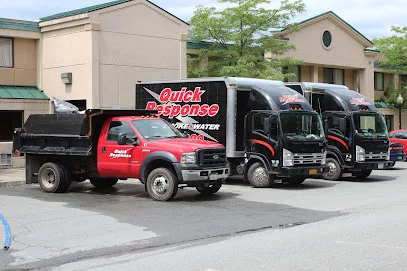
Mold remediation decisions in Albany usually start when visible growth appears after a leak, a flooded basement, a burst pipe, or a storm event—then the priority shifts to moisture control. Quick Response operates in the Capital Region and highlights emergency restoration services with a focus on water damage and mold remediation. If you’re contacting them at 315 Washington Ave Ext, Pine West Plaza Bldg 1, Suite 115, Albany, NY 12205, United States (or calling +1 518-818-6726), the most productive first step is to make sure the remediation plan is built around the moisture pathway that caused the mold—not just the staining you can see.
Connect the mold plan to the specific water source
In most properties, mold is a result of moisture, not the original problem. Before demolition or cleaning begins, a qualified team should explain where the water came from and how it will be prevented from returning. Because water damage response drives the overall strategy, ask how they will determine the source in your structure—whether the driver is a plumbing leak, a basement seep, or moisture trapped in materials. The approach should change depending on what caused the wet conditions in the first place.
Containment and PPE should match the materials being remediated
Mold remediation can create disturbed spores and dust during cleaning and removal, so containment and protective equipment should scale to the area and materials involved. For example, the plan should address porous building components such as drywall, insulation, and flooring where applicable. During the call, ask whether the work zone will be isolated with proper barriers and dust control, and how the team will protect people and unaffected areas. If the explanation stays too general—simply “we’ll clean it up”—press for a clear scope that reflects the rooms and material types that will be impacted.
Ask for a logical demolition and containment sequence
Before the crew arrives, the contractor should be able to describe a sensible sequence: what gets protected first, what gets removed, how debris is managed, and how the work area is controlled so hazards stay contained. This matters because containment issues often show up later as persistent odor, repeated spotting, or recurring moisture-related complaints. A team that can walk you through the workflow demonstrates that the remediation is planned, not improvised.
Verify drying and moisture-source control, not just surface cleanup
Even after contaminated materials are cleaned or removed, the job is not complete until the moisture driver is addressed and the property dries reliably. For Albany properties, drying typically requires more than briefly running a dehumidifier and moving on. Ask what monitoring is used and what criteria will be used to declare the affected area dry enough for the next steps. The best remediation process includes measurable confirmation, so you’re not left guessing whether the conditions that supported mold have truly been corrected.
Request completion documentation tied to the scope of work
Completion should include documentation, not just the end of visible work. Before you assume everything is finished, ask what paperwork or end-of-job details you will receive that relate to the remediation scope. Since Quick Response publicly emphasizes water damage and mold remediation services, you should still request property-specific confirmation such as what materials were removed, how containment was handled, what was cleaned, and what verification occurred regarding drying before restoration begins.
Use your first call to confirm scope fit for your property
Your first call should help you confirm three things: the remediation plan matches the underlying moisture pathway, containment and PPE are scaled to the affected materials, and drying will be verified with clear, job-end documentation. If you reach Quick Response by phone at +1 518-818-6726 or through https://www.qrrestore.com/?utm_campaign=gmb&utm_medium=organic&utm_source=gbp, keep the conversation focused on inspection-to-completion details. In mold remediation, preventing repeat moisture is part of the cure.
More field postings
- Property Recovery 911 in Philadelphia: Decide Between a Mold Report and Remediation Property Recovery 911 lists mold remediation and water mitigation in Philadelphia. Use this guide to define whether the next decision is ins…
- DryDocs Restoration in Philadelphia: Connect Water Damage to Mold Remediation Scope DryDocs lists water extraction, structural drying, water damage restoration, and mold remediation. Use those service signals to clarify wher…
- MSR Restoration in Philadelphia: Prepare for a Mold Inspection Report Use MSR Restoration’s published inspection and remediation sequence to prepare a useful mold assessment, understand its limits, and decide w…