Home Field postings Mold Remediation Guides
Clean Remodel LLC in Dedham, MA: What to Confirm for Mold Remediation After Water Damage
Before you hire Clean Remodel LLC, confirm inspection deliverables, containment boundaries, and documented drying—so mold remediation connects to the moisture source.
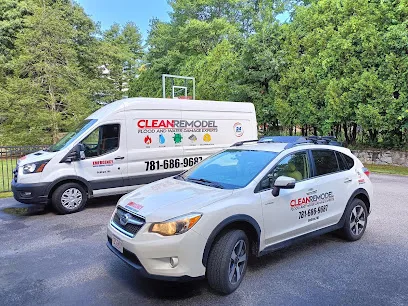
When mold shows up after a leak, the most costly mistake is assuming visible growth is the whole problem. With Clean Remodel LLC serving Dedham and the Greater Boston area, the decision starts with a practical question: what evidence will the remediation process produce in writing, and how will it connect mold cleanup to the moisture source that created it?
Clean Remodel lists water, fire, and mold damage restoration services and states it is available for emergency restoration and 24/7 coverage. Before you rely on any marketing claim, verify the current scope for your job and confirm how the team documents each step.
Start with the place facts you can verify
Before comparing estimates, make sure you’re speaking with a team tied to your location and the correct service channel. Clean Remodel LLC’s public information includes an address reference at 46 River St, Dedham, MA 02026, a phone number +1 781-686-9687, and an official website at https://www.cleanremodel.com/. Use these as your baseline to confirm routing, scheduling, and service fit for a Dedham property.
What the inspection should produce (and how you’ll receive it)
A credible mold remediation workflow starts with inspection outputs you can repeat and understand. On your call, ask what they will document for your property—such as the suspected moisture origin, the impacted materials, and the work boundaries for cleanup and/or removal.
Specifically, ask for a written scope that explains which building materials are being removed versus cleaned, and why. If their answer is mostly general (“we’ll address the mold”), request clarification so you know what is in scope for each affected area.
Boundaries and containment that match your rooms and airflow
Containment isn’t just plastic and tape—it’s how you prevent cross-contamination during remediation. Ask how containment boundaries are chosen for your layout, including rooms, hallways, and any HVAC pathways that could move disturbed air.
If your water damage affected multiple spaces (for example, more than one room or an area with shared pathways), ask whether containment is adjusted to prevent dust migration through shared airflow or openings between areas.
Drying and moisture control: ask for proof of progress
Mold remediation often fails when drying is treated as a background step. Ask how they will control moisture using dehumidification and air movement, and what evidence they will provide that materials are reaching appropriate drying conditions.
Also ask whether monitoring continues after active work and how they decide the project is ready for the next stage of restoration. The goal is to reduce the chance of returning mold by addressing moisture, not only surface issues.
Keep the conversation focused on moisture source, not just staining
Because Clean Remodel positions water damage restoration and mold remediation as connected services, use that as a guide for your questions. Confirm that the remediation addresses the moisture source that created the problem, rather than focusing only on visible staining or the most obvious mold areas.
Questions to align scope, documentation, and cleanup-to-restoration handoff
Use these questions with Clean Remodel LLC (or any contractor) before agreeing to a scope:
- What documentation will you provide for the inspection and the final remediation scope?
- How will containment be set up for my layout, and what steps prevent dust migration?
- How do you measure and document drying progress before cleanup is considered complete?
- What materials are expected to be removed, cleaned, or left in place—and why?
- If there was water damage, how do you ensure the remediation addresses the moisture source, not just the surface effects?
How to make the inspection results usable for your home
For the inspection to produce accurate boundaries, provide clear access to the affected areas. Make sure you can point out when the leak happened, how long it may have run, and whether odors or visible growth expanded over time. That timeline helps a contractor connect mold findings to the moisture history and decide what to contain, test, and remove.
Choosing mold remediation is less about finding a company that “does mold” and more about selecting a team that can explain the process with evidence. If Clean Remodel LLC can walk you through inspection deliverables, containment logic, and drying documentation, you’ll have a clearer scope—and a better chance of reducing the risk of paying twice.
More field postings
- Property Recovery 911 in Philadelphia: Decide Between a Mold Report and Remediation Property Recovery 911 lists mold remediation and water mitigation in Philadelphia. Use this guide to define whether the next decision is ins…
- DryDocs Restoration in Philadelphia: Connect Water Damage to Mold Remediation Scope DryDocs lists water extraction, structural drying, water damage restoration, and mold remediation. Use those service signals to clarify wher…
- MSR Restoration in Philadelphia: Prepare for a Mold Inspection Report Use MSR Restoration’s published inspection and remediation sequence to prepare a useful mold assessment, understand its limits, and decide w…