Home Field postings Mold Remediation Guides
Quality Mold Remediation LLC (Albany, NY): 7 Verification Points for Water-Damage Mold Remediation Jobs
Before demolition or cleanup starts, confirm containment, HEPA-grade cleaning, drying proof, and the plan to address the moisture source—using clear documentation.
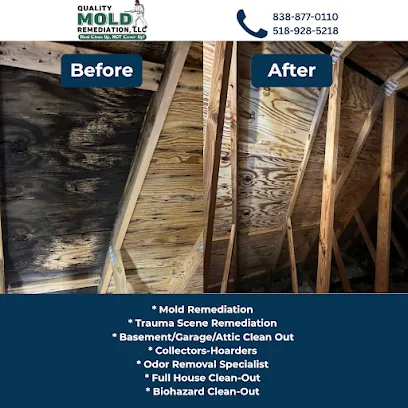
Mold remediation in a home is rarely solved by scrubbing visible spots. For a water-damage situation in Albany, the decisions that matter start before the first tool comes out: how the team will contain contamination, how they will remove mold safely, and how you’ll get proof that the moisture source is actually controlled and the affected materials are dry.
If you’re considering Quality Mold Remediation LLC, a New York State licensed mold removal and remediation provider, use the points below to pressure-test the job plan. The company’s public materials emphasize licensed mold removal, containment procedures, and tools like air scrubbers and HEPA vacuums, with services that may include cleaning/sanitization and restoration when needed. (For reference, the public listing shows 65 McAlpin St, Albany, NY 12209, and phone +1 518-977-0229.)
1) Confirm the plan is built around the water-damage pathway, not just staining
Ask what caused the dampness (plumbing leak, roof issue, flood, condensation, or a hidden wet wall cavity) and how that will be corrected. The company’s FAQ notes moisture control as the key to mold control, and also explains that mold growth can begin within 24–48 hours after materials become wet. Your goal is to make sure remediation addresses the original water problem, not only the mold you can see.
2) Containment should match the layout of your rooms and materials
Containment isn’t a generic checkbox. You want to understand what area will be isolated, what barriers will be used, and how the team will prevent airborne spread while work is happening. Quality Mold Remediation references “various containment procedures” and even mentions advanced containment such as a negative air chamber in its public FAQ. During the call, request details: where the containment will be set up, how long it will remain in place, and how they’ll manage traffic (entry/exit) during removal and cleanup.
3) Demand HEPA-grade cleaning and air control—then document it
Public information from the company says they use air scrubbers and HEPA vacuums to capture microscopic mold spores out of the air. When you verify the approach, don’t settle for vague wording like “we’ll vacuum.” Ask whether HEPA filtration is used at the worksite, what equipment is brought in, and how containment air treatment will be run during active mold removal and cleaning. If the scope involves sensitive spaces (basements, closets, HVAC-adjacent areas), ask how overspray and dust migration will be controlled.
4) Verify removal + cleaning + sanitization are part of the same scope
Many failed jobs happen when the work is treated like two separate operations: “remove the mold” and “maybe clean later.” Quality Mold Remediation describes mold remediation services that include cleaning and sanitization, along with anti-fungal or antimicrobial treatments as part of its treatment process. Ask the contractor to break the work into steps that clearly cover: what surfaces are removed, what gets HEPA-vacuumed and cleaned, and what “sanitization” means for your materials (drywall, insulation, wood, flooring, or contents).
5) Ask for moisture-drying proof, not just “it feels dry”
Because mold is fed by moisture, you should require drying verification before the job is considered complete. Even if the contractor is focused on containment and cleaning, push for confirmation that affected materials will be dried efficiently and that the moisture source is controlled. You can ask what measurement approach they use (for example, tracking moisture levels with testing/verification) and what sign-off looks like when restoration begins.
6) Clarify the boundaries for demo and rebuild work
Water damage mold remediation often leads to restoration. The company’s public materials describe rebuild services to address structural damage that may have occurred due to mold damage, and it also references restoration that can include replacing drywall and painting. Before agreeing to scope, ask what parts of the wall/ceiling/floor will be removed, what will be kept, and what the rebuild process includes once demolition is done—especially if your project involves multiple rooms or concealed cavities.
7) Get a written scope and a defensible timeline
Even strong contractors will vary depending on the size and complexity of the affected area. Ask for a written scope that ties containment, removal/cleaning/sanitization, drying verification, and any restoration steps into a single sequence. If they claim comprehensive remediation, request how the plan accounts for the area affected and the likely spread path. For a practical call-ready reference point, you can mention the company’s public contact details (65 McAlpin St, Albany, NY 12209; +1 518-977-0229) and ask whether they can confirm the specific containment and equipment approach for your conditions.
Mold remediation decisions are about more than selecting a provider—it’s about validating that the job is engineered to stop airborne spread, eliminate the mold safely, and correct the moisture problem so growth can’t simply resume. Use these verification points to make sure your remediation plan is complete, documented, and aligned with water damage, not just visible contamination.
More field postings
- Property Recovery 911 in Philadelphia: Decide Between a Mold Report and Remediation Property Recovery 911 lists mold remediation and water mitigation in Philadelphia. Use this guide to define whether the next decision is ins…
- DryDocs Restoration in Philadelphia: Connect Water Damage to Mold Remediation Scope DryDocs lists water extraction, structural drying, water damage restoration, and mold remediation. Use those service signals to clarify wher…
- MSR Restoration in Philadelphia: Prepare for a Mold Inspection Report Use MSR Restoration’s published inspection and remediation sequence to prepare a useful mold assessment, understand its limits, and decide w…