Home Field postings Mold Remediation Guides
Property Restoration Inc. Mold Remediation in Syracuse: How to Confirm the Plan After Water Damage
When mold follows a leak, the right provider should prove the moisture source, match containment to your rooms, and document drying before cleanup is declared complete.
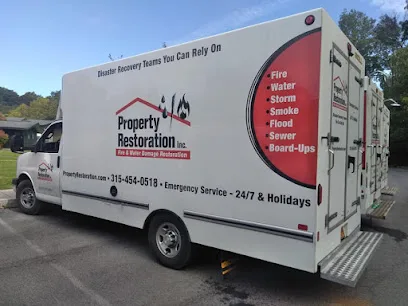
Mold remediation after water damage is never just about removing visible growth. In Syracuse homes where water intrusion can start quietly—behind drywall, under flooring, or around plumbing penetrations—the highest-risk decisions happen early: identifying the moisture source, stopping the spread, and proving that affected materials were properly dried before the area is cleared.
For homeowners considering Property Restoration Inc. (6194 Thompson Rd, Syracuse, NY 13206; +1 315-454-0518; http://www.propertyrestoration.com/), use this decision guide to pressure-test scope, documentation, and containment details. The goal is simple: make sure their process matches your specific water path, building materials, and timeline—not a generic checklist.
1) Start the call with the water source, not the mold
Before anyone discusses cleaning methods, the provider should be able to explain how they will determine why moisture is present and how far it traveled. Property Restoration Inc. publicly emphasizes mitigation and rapid response concepts around water damage and mold prevention, including the importance of drying affected areas quickly (they note professional drying of water-damaged areas/items within 24–48 hours to help prevent mold growth).
Ask what they will do to confirm the moisture source and duration—whether it was a flooded basement, burst pipes, toilet overflow, a recurring leak, or a hidden failure. A solid response should connect the “how it got wet” story to the remediation plan: removal boundaries, drying targets, and what materials may need to be addressed.
2) Containment should reflect your rooms, airflow, and materials
Containment is where many remediation projects fail quietly. You want containment setup to reflect your layout: HVAC pathways, open doorways, the number of rooms affected, and material types (drywall, subfloor assemblies, insulation, carpeting). If a contractor can only describe broad containment steps, that’s a warning sign.
Property Restoration Inc. offers mold remediation as part of broader water/flood and damage restoration services, so the team should be able to describe how they isolate the work area for the specific mold/water conditions you report. Ask:
- Will containment be set up per-room or based on airflow zones?
- What barriers, negative air, or filtration steps are planned (and why)?
- How will they manage dust migration during removal/demolition?
Even if the job is small, containment should still be intentional—especially if you have sensitive occupants, finished living spaces, or shared ventilation.
3) Require documentation: inspection findings, scope boundaries, and drying proof
Remediation is a “process with proof,” not a set of actions. For any mold cleanup following water damage, ask what documents you will receive after inspection and before work is declared complete. A good provider should be comfortable writing down what they found, what they removed or treated, and how they verified that drying goals were met.
Given Property Restoration Inc.’s published focus on water damage mitigation and mold response, you should still confirm what their written plan includes. Request clarity on:
- Inspection results that explain the affected areas and suspected moisture migration path.
- Exact scope boundaries (what’s included, what’s excluded, and why).
- Drying metrics and end-of-job verification—what readings or tests show materials returned to acceptable moisture conditions.
If their process is strong, the paperwork should make sense to you even without a restoration background.
4) Clarify scope changes after cleanup begins
Leaks often cause hidden damage. As remediation advances, the scope can change when additional affected materials are uncovered. Ask how they handle newly discovered water damage behind walls or under flooring—what triggers a change order, and how quickly they will communicate it.
Also ask whether they plan any reconstruction steps as part of the same workflow or whether that portion is handled separately. Property Restoration Inc. describes reconstruction services publicly, so you can confirm whether reconstruction is included for your situation and how scheduling is coordinated.
Make one last safety check before signing
Before work begins, request that the plan addresses access restrictions, dust control, and what household tasks (moving belongings, shutting down certain systems, or temporarily relocating) you should handle. If anything feels vague—especially around containment, drying verification, or written documentation—ask for specifics in writing.
Mold remediation after water damage becomes safer and more predictable when you insist on the fundamentals: prove the moisture source, contain appropriately, document inspection and drying outcomes, and align scope changes with clear communication. Use those questions with Property Restoration Inc. so your next steps are grounded in process—exactly what a homeowner needs when the “mold problem” is really a moisture problem underneath.
More field postings
- Property Recovery 911 in Philadelphia: Decide Between a Mold Report and Remediation Property Recovery 911 lists mold remediation and water mitigation in Philadelphia. Use this guide to define whether the next decision is ins…
- DryDocs Restoration in Philadelphia: Connect Water Damage to Mold Remediation Scope DryDocs lists water extraction, structural drying, water damage restoration, and mold remediation. Use those service signals to clarify wher…
- MSR Restoration in Philadelphia: Prepare for a Mold Inspection Report Use MSR Restoration’s published inspection and remediation sequence to prepare a useful mold assessment, understand its limits, and decide w…