Home Field postings Mold Remediation Guides
Rockwell Indoor Environmental (Liverpool, NY) Mold Remediation Decision Guide: How to Match Inspection, Containment, and Moisture Mapping to Your Damage
Before remediation starts, a solid plan should trace the water/mold connection, define containment, and document findings—here’s what homeowners can verify with Rockwell Indoor Environmental.
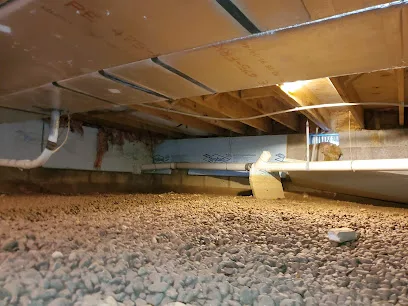
Mold remediation goes wrong when the job is scoped around visible growth instead of the conditions that created it. If you’re in the Liverpool/Syracuse area and you’re deciding whether Rockwell Indoor Environmental is a fit for your cleanup, the best place to start is the plan: inspection first, then moisture mapping, then containment, and finally remediation steps tied to what the team finds.
This decision guide is written for homeowners and property managers who want to ask sharper questions before work begins. It also reflects key public signals that Rockwell Indoor Environmental lists an indoor-environment focus and highlights containment and “moisture mapping” alongside mold damage assessment.
Start with the “why”: what evidence should an inspection produce?
After a leak, slow seep, flooding, or persistent humidity, mold often shows up where materials stayed damp long enough to grow. A strong remediation workflow starts by identifying causation and origin, not just taking pictures of spots.
Rockwell Indoor Environmental’s public website describes property-damage consulting that includes contamination assessment for items such as water/fire/mold/biohazard, plus tools like moisture mapping and mold damage assessment. In practice, homeowners should expect the inspection to produce answers to questions like: Where is the moisture coming from? How far did it travel? Which building materials are affected (and which are likely salvageable)?
Concrete verification to request: ask whether the assessment output will clearly describe suspected sources, affected materials, and the logic connecting “water conditions” to “mold conditions.” If the plan can’t explain the “why,” it’s harder to trust the “how.”
Containment is not optional—so check that it’s tailored to the room
Mold remediation should include controlled work practices that limit spore movement and protect occupants and belongings. Containment typically means barriers, controlled airflow, and staged access—especially when removal involves porous materials.
Rockwell Indoor Environmental’s service descriptions emphasize “critical barriers & containment” and a remediation protocol designed to address isolated contamination with confidence. For your decision, the key is whether containment is planned around your layout and the specific materials involved (drywall, insulation, flooring underlayment, etc.), rather than using a generic setup.
What you should look for in their job plan
- Clear containment boundaries (what’s “inside” versus “outside”).
- How they manage dust and airflow during removal.
- How occupants, pets, and HVAC return paths will be protected during the project.
If you can’t visualize where the containment goes, or if the plan doesn’t address airflow and dust control, treat that as a red flag. Mold spores and disturbed debris can spread quickly when the work area isn’t controlled.
Moisture mapping should drive scope, not just reassure you
Moisture mapping is one of the most practical decision points because it influences both remediation scope and expectations for drying. Instead of relying on “it looks dry,” you want measurements and a moisture story that explains how wet conditions will be corrected and verified.
Rockwell Indoor Environmental’s website messaging includes moisture mapping and mold damage assessment. When discussing your case, ask how the team will document moisture levels before and after mitigation, and what criteria will be used to determine when the environment is ready for the next phase (or for restoration).
Concrete questions: What areas will be measured? Are measurements recorded room-by-room? Will the team explain how moisture readings connect to removal decisions (for example: whether wall cavities, subfloors, or insulation are included)?
Don’t skip documentation: what should you receive in writing?
Homeowners often underestimate how helpful documentation is—especially if you’re coordinating with an insurance carrier, a remediation contractor, or long-term property management. Written records can support consistency across the remediation timeline.
Rockwell Indoor Environmental positions itself as an expert consultant and guidance partner for property-damage issues, including mold-related contamination and indoor environmental analysis. That means your “deliverables” conversation matters.
Request documents that answer these three needs
- Discovery: what was observed and why the team believes it indicates a moisture source.
- Containment logic: how the barriers/containment correspond to the impacted areas.
- End-of-job clarity: what outcomes were achieved and what evidence supports “clearance” or readiness to move forward.
Also, confirm who is responsible for the final verification step: is it included in the scope, and is it performed after the remediation phase is complete?
Why local fit and communication style matter in mold cases
Mold remediation planning often depends on site-specific constraints—how quickly the space needs to reopen, how the HVAC system is configured, and which occupants or tenants must remain protected. Even with the right technical approach, communication determines whether the project stays aligned.
Rockwell Indoor Environmental lists contact details publicly, including an address in Liverpool and a phone number for scheduling and questions. When you call, pay attention to whether the person on the other end can talk through the “water story,” containment expectations, and the role of moisture mapping without rushing to a one-size-fits-all pitch.
Helpful contact signals (from public sources): Rockwell Indoor Environmental lists 8430 Oswego Rd #302, Liverpool, NY 13090, phone +1 315-715-5847, and website https://rockwellenv.com/.
In the end, a good mold remediation decision isn’t only about the work that gets done—it’s about whether the plan explains the problem clearly, contains the risk while work is underway, and verifies that moisture conditions driving mold have been addressed.
More field postings
- Property Recovery 911 in Philadelphia: Decide Between a Mold Report and Remediation Property Recovery 911 lists mold remediation and water mitigation in Philadelphia. Use this guide to define whether the next decision is ins…
- DryDocs Restoration in Philadelphia: Connect Water Damage to Mold Remediation Scope DryDocs lists water extraction, structural drying, water damage restoration, and mold remediation. Use those service signals to clarify wher…
- MSR Restoration in Philadelphia: Prepare for a Mold Inspection Report Use MSR Restoration’s published inspection and remediation sequence to prepare a useful mold assessment, understand its limits, and decide w…