Home Field postings Mold Remediation Guides
PureTide Services in Manchester: Defining Mold Remediation After Water Damage
A practical field note for Manchester property owners comparing PureTide Services, inspection questions, containment details, and the scope of post-water-damage mold work.
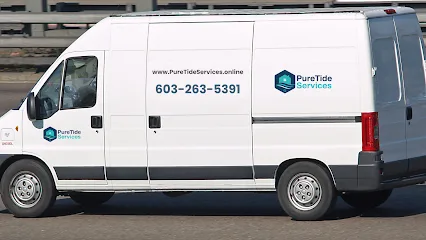
When a Manchester property has been affected by a leak, flood, or prolonged dampness, the visible stain is only one part of the decision. The more useful question is how the water damage, inspection findings, containment plan, and remediation work will fit together. PureTide Services is listed as a Manchester provider focused on Water Damage Mold Remediation, with public information pointing to water damage restoration, safety equipment, and containment-related cleanup. Those signals give a property owner a starting point, not a reason to skip the details of the property-specific scope.
The water-damage timeline should shape the first call
Before contacting a contractor, write down when the moisture appeared, what caused it if known, and which materials were wet. A supply-line leak, roof intrusion, basement seepage, and a long-term humidity problem can produce very different remediation questions. Note whether drywall, insulation, flooring, cabinetry, or stored contents were affected. Photographs taken before extensive cleaning can also help explain the situation, although they do not replace an on-site inspection.
PureTide Services describes its focus as mold remediation connected with water damage in Manchester, but the available business record does not establish a universal response time, a fixed project size, or a standard price. A first inquiry should therefore ask whether the company evaluates the moisture source, documents affected materials, and separates water extraction or drying from mold-related work. Those distinctions make later estimates easier to compare.
Inspection findings should become a defined work boundary
A useful inspection conversation identifies where visible or suspected mold is located, what building materials are involved, and whether adjacent areas need evaluation. The property owner can ask how the contractor distinguishes active moisture from old staining and how hidden spaces are considered. If testing is proposed, ask what question it is intended to answer and whether any post-remediation verification is handled by the same party or by an independent professional. Neither testing nor a laboratory result, by itself, defines the entire cleanup scope.
The address listed for PureTide Services is 500 N Commercial St STE 502, Manchester, NH 03101, United States. Because a listed office address does not automatically confirm travel coverage for every property, the inquiry should include the job address, building type, access conditions, and the distance from the Manchester location. This is especially relevant for multi-unit buildings, commercial spaces, or properties with restricted loading and parking.
Containment questions reveal how disruption will be managed
Containment is more than a phrase in an estimate. Ask where barriers would be placed, how air movement would be controlled, how workers would enter and leave the affected area, and how debris or contaminated materials would be handled. The record for PureTide Services specifically highlights containment and professional safety cleanup, as well as safety equipment. A homeowner should ask how those signals translate into the proposed room-by-room plan rather than assuming that every project uses the same controls.
Also discuss what remains occupied during the work. A basement, rental unit, daycare area, or office may require a different sequencing plan from an empty single-family room. Ask which rooms must be cleared, whether HVAC pathways are considered, and how the contractor will communicate changes if opening a wall reveals additional moisture. These questions focus on practical disruption without promising a particular method before the inspection.
The written scope matters more than a broad service label
“Mold remediation” can describe a narrow cleaning project or a larger effort involving source correction, demolition, drying, containment, disposal, and reconstruction coordination. Request a written scope that identifies the affected areas, materials to be removed or cleaned, drying responsibilities, exclusions, projected sequence, and payment terms. If the estimate includes testing, clearance, repairs, or contents handling, each item should be identifiable rather than bundled into an unclear total.
The company’s listed phone number is +1 603-263-5391, and its listed website is https://puretideservices.online/. Contact information should be verified when the project is scheduled. During that conversation, ask whether the person preparing the scope can explain insurance documentation, warranties, licensing or credential requirements that apply to the work, and any limits on services. The available public record does not verify those items, so they should be confirmed directly instead of inferred from the service category.
A focused inquiry makes contractor comparison fairer
Send the same basic facts to each provider: the water source, approximate timeline, affected rooms, visible conditions, occupancy, photographs, and any prior drying or cleaning. Then compare the answers for clarity. A strong response should explain what needs to be confirmed on site, what is included, what is excluded, and which decisions depend on inspection findings. That approach helps a Manchester owner evaluate PureTide Services on documented fit for the property rather than on a broad label alone.
For PureTide Services, the most useful next step is a direct scope conversation centered on water damage, inspection, containment, and the exact materials involved. Confirm the current address, phone, website, service coverage, documentation, and proposed work in writing before authorizing remediation. Clear questions cannot remove every uncertainty, but they can turn a stressful mold concern into a more manageable property decision.
More field postings
- Property Recovery 911 in Philadelphia: Decide Between a Mold Report and Remediation Property Recovery 911 lists mold remediation and water mitigation in Philadelphia. Use this guide to define whether the next decision is ins…
- DryDocs Restoration in Philadelphia: Connect Water Damage to Mold Remediation Scope DryDocs lists water extraction, structural drying, water damage restoration, and mold remediation. Use those service signals to clarify wher…
- MSR Restoration in Philadelphia: Prepare for a Mold Inspection Report Use MSR Restoration’s published inspection and remediation sequence to prepare a useful mold assessment, understand its limits, and decide w…