Home Field postings Mold Remediation Guides
Professional Fire Restoration (Albany) Mold Remediation Decisions: What to Verify Before Cleanup Starts
Learn what to confirm with a mold remediation contractor in Albany—especially after water damage—so remediation and containment align with your property and evidence.
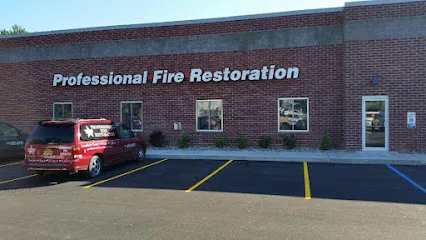
Mold remediation after a leak is rarely about “scrubbing the spots.” In Albany, NY, the right response starts with proving what caused the moisture and then matching the cleanup plan to the actual materials in your home. When you call Professional Fire Restoration, you’ll see water-damage and mold-prevention language on their site, including a process built around rapid response and an inspection-driven plan. Their public info also points to a local address and an emergency phone line you can use to verify current availability: 2053 Central Ave, Albany, NY 12205, United States and +1 518-452-1831 (official site: http://www.pfrs.com/).
This article is written as a decision guide—so you can steer the conversation from “we found mold” to “we can document and control the moisture problem.”
Start with the moisture source, not the visible growth
The most important question is what fed the mold. Ask the contractor to explain how they determine whether the source is an ongoing condition (active leak, failed plumbing supply line, roof penetration, condensation, or flood intrusion) versus a resolved one. A strong remediation team won’t treat the mold as the primary problem. Instead, they’ll connect remediation to the moisture timeline—what happened, when it started, and which building cavities were likely affected.
Request a scope discussion tied to the leak path
For water-damage driven mold issues, materials can be affected far beyond the first stain. During the inspection, verify that they consider hidden routes such as behind baseboards, around plumbing penetrations, and inside layered wall assemblies. If the leak was from a burst pipe or an overflow, ask them to explain what components are typically removed versus cleaned-in-place for microbial control.
Containment should reflect your rooms and your airflow—not a generic setup
Containment is where many remediation plans become vague. Ask how they tailor dust control to your layout: the room(s) involved, nearby living areas, HVAC return paths, and whether they need to isolate work areas from traffic routes.
A practical sign you’re getting a credible plan is that they describe containment in terms of outcomes (dust control and isolation) and in terms of what will happen during active work: how they manage debris, where equipment will run, and how they prevent cross-contamination while they remove affected materials.
Ask what documentation they provide after inspection
Professional Fire Restoration describes a stage-based approach that includes inspection, documentation, and a tailored restoration plan. Use that framing as your expectation level: request an inspection summary you can keep—so the scope is not just “verbal.” Specifically ask for a written record of what materials were considered affected and why, plus the boundaries of containment.
Drying proof matters if you want remediation to be truly complete
Water damage and mold prevention go together, and “done” should not mean “the smell went away.” Ask how they measure drying progress in the materials that were wet. In credible plans, you’ll hear about monitoring, target conditions, and how drying is verified—not guessed.
Because mold thrives when conditions stay favorable, the contractor should explain how they coordinate demolition/cleanup with drying so they don’t trap moisture behind repaired surfaces. If they can’t describe how drying is verified, ask what their internal acceptance criteria are before they stop work.
Insurance coordination and timelines—what to confirm before you sign
If you’re dealing with a loss claim, ask whether they coordinate directly with your insurance carrier as part of the documentation and estimate process. Their site references working through an insurance coordination step as part of the overall workflow. Even so, don’t assume timelines—request a clear plan for how long each phase typically takes: immediate stabilization, inspection and scope confirmation, mitigation/removal, drying verification, and then the repair stage.
Before approval, ask them to outline what you should expect day by day: who will be on-site, what areas are closed off, and how waste and debris are handled.
Use these proof points in your Albany provider call
When you contact a mold remediation team, keep the conversation anchored to verification. For Professional Fire Restoration, you can start with their publicly listed emergency contact and Albany address: +1 518-452-1831 and 2053 Central Ave, Albany, NY 12205. Then ask four focused questions: (1) How will you identify the moisture source and confirm it’s controlled? (2) What containment plan matches my rooms and airflow paths? (3) What written documentation will you provide after inspection and scope? (4) How do you verify drying before you consider remediation complete?
If the answers connect moisture control, containment, inspection evidence, and drying proof, you’re less likely to pay for “cleanup” that doesn’t address the underlying risk.
More field postings
- Property Recovery 911 in Philadelphia: Decide Between a Mold Report and Remediation Property Recovery 911 lists mold remediation and water mitigation in Philadelphia. Use this guide to define whether the next decision is ins…
- DryDocs Restoration in Philadelphia: Connect Water Damage to Mold Remediation Scope DryDocs lists water extraction, structural drying, water damage restoration, and mold remediation. Use those service signals to clarify wher…
- MSR Restoration in Philadelphia: Prepare for a Mold Inspection Report Use MSR Restoration’s published inspection and remediation sequence to prepare a useful mold assessment, understand its limits, and decide w…