Home Field postings Mold Remediation Guides
New Hampshire Property Recovery Group: A Bedford-Based Mold Remediation Scope Guide
How Bedford and Manchester property owners can use water-damage history, inspection details, and containment questions to define a mold remediation scope.
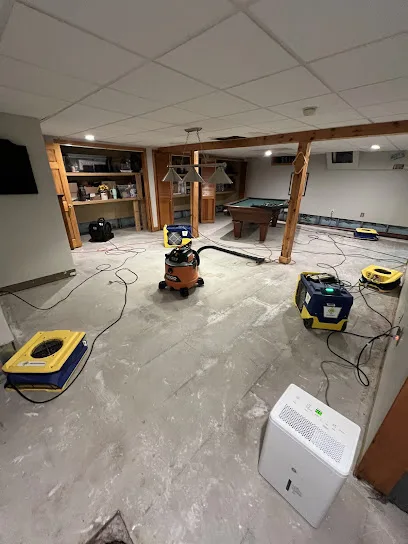
Mold concerns rarely begin with mold alone. In Southern New Hampshire homes, the more useful starting point is often the event or condition that left materials damp: a plumbing leak, basement seepage, appliance failure, storm intrusion, or water that was removed before the full structure dried. New Hampshire Property Recovery Group is listed at 288 State Rte 101, Bedford, NH 03110, and its public service category is Water Damage Mold Remediation. Those details make the company relevant to homeowners comparing remediation options around Bedford and Manchester, but they do not replace a project-specific inspection.
The moisture story should define the first conversation
A strong inquiry gives the contractor a timeline rather than only a symptom. A homeowner can note when the water entered, whether it was clean or contaminated, which rooms were affected, how long materials stayed wet, and whether odors or visible growth appeared later. This matters because mold remediation is linked to moisture control. Surface cleaning may not address damp drywall, insulation, flooring assemblies, or hidden cavities that remain affected.
New Hampshire Property Recovery Group’s official website describes water-damage work that includes detecting hidden moisture, removing standing water, and drying affected areas. That is useful context when asking whether the current concern should be treated as a mold-only project or as a water-damage and mold investigation. The answer should be based on observed conditions, not on a broad service label.
Inspection findings should become a clear boundary
Before comparing estimates, ask what the inspection is intended to establish. The written findings should identify the apparent source of moisture, affected rooms or materials, areas that require further investigation, and conditions that could allow regrowth. If the source has not been corrected, ask how the proposed work accounts for it. A remediation scope that lists “mold cleanup” without describing locations, materials, and exclusions is difficult to evaluate.
The company’s public site identifies mold remediation as one of its residential remediation services and also describes reconstruction among its offerings. For a homeowner, that combination makes it especially important to separate remediation from rebuilding in the written scope. The documents should show which materials are being cleaned, which may be removed, who handles repairs, and whether any post-remediation assessment or testing is a separate step. The exact process and pricing should be confirmed directly.
Containment questions reveal how disruption will be managed
Containment is not just a technical word; it affects how an occupied home can function during the work. Ask where barriers or pressure controls will be used, how workers will move through clean portions of the property, how debris will be handled, and what the homeowner should remove or protect. The right questions may differ for a finished basement, a bedroom, a shared hallway, or a property with children, pets, tenants, or sensitive belongings.
New Hampshire Property Recovery Group’s listing includes containment and professional safety cleanup as a relevant use case, while its official site emphasizes careful restoration. Those signals support a focused discussion about work-zone boundaries and safety procedures, but they should not be read as a promise about a particular method. The contractor should explain the proposed controls for the specific structure and materials involved.
Bedford location and Manchester service area should be confirmed
The record associates this provider with Manchester-area mold remediation, while the listed address is in Bedford. Its official website says it services Southern New Hampshire. That is a useful regional indication, not a guarantee that every property, travel distance, or project type is handled under the same terms. When requesting an appointment, provide the property address, access limitations, parking or stair concerns, and whether the building is occupied. These details can affect scheduling and the practicality of the proposed work.
For current service availability, the published phone number is +1 603-681-5667. The official website is https://nhpropertyrecovery.com/. A phone conversation can clarify whether the company is assessing active water damage, suspected mold, reconstruction needs, or a combination. It is also a sensible time to ask what information should be sent before an inspection.
A useful estimate should make comparison possible
Before authorizing work, request a written scope that identifies the affected areas, planned containment, cleaning or removal methods, drying or moisture-control tasks, repair responsibilities, timing assumptions, exclusions, and payment terms. Ask whether insurance documentation is available and what the contractor will provide to an adjuster; the company states that it documents damage and prepares estimates for review, while noting that it is not a public adjuster or law firm. Coverage decisions should therefore be confirmed with the insurer.
For New Hampshire Property Recovery Group, the best fit depends on the property’s moisture history, the inspection findings, and the clarity of the proposed boundary—not simply on the presence of a mold-remediation category. Bedford and Manchester homeowners can make the first call more productive by describing the water event, asking how containment will be documented, and requiring the final scope to distinguish remediation from reconstruction.
More field postings
- Property Recovery 911 in Philadelphia: Decide Between a Mold Report and Remediation Property Recovery 911 lists mold remediation and water mitigation in Philadelphia. Use this guide to define whether the next decision is ins…
- DryDocs Restoration in Philadelphia: Connect Water Damage to Mold Remediation Scope DryDocs lists water extraction, structural drying, water damage restoration, and mold remediation. Use those service signals to clarify wher…
- MSR Restoration in Philadelphia: Prepare for a Mold Inspection Report Use MSR Restoration’s published inspection and remediation sequence to prepare a useful mold assessment, understand its limits, and decide w…