Home Field postings Mold Remediation Guides
New England Restoration LLC in Woodbridge, CT: How to Judge a Mold Remediation Plan Before You Approve Cleanup
Use this Woodbridge, CT decision guide to confirm containment, documentation, and mold testing/report steps before a remediation crew starts.
Seeing mold after a leak, condensation problem, or a long period of dampness can feel urgent—but the job you approve should be built around the water problem, not the visible growth. New England Restoration LLC (16 Diana Dr, Woodbridge, CT 06525) works in the mold remediation space, and their public information lists mold testing and indoor air quality testing among the services you may ask about. Their phone number is +1 203-404-5826, and the company website is https://newengland-restoration.com/.
This guide focuses on how to evaluate whether their approach fits your situation. If you’re deciding on a remediation partner in Woodbridge, the questions below help you spot common gaps—especially when the scope needs to be coordinated with insurance, property management, or landlord/tenant timelines.
Start with the “moisture source” plan, not the stain
A strong mold remediation proposal should explain where the moisture came from and what will stop it. Ask what evidence they use during inspection: do they look for active leaks, humidity contributors, plumbing issues, roof/wall penetrations, or HVAC condensation? If they only document the mold you can see, that’s a risk—mold can return once the underlying moisture path is still present.
Confirm containment is documented room-by-room
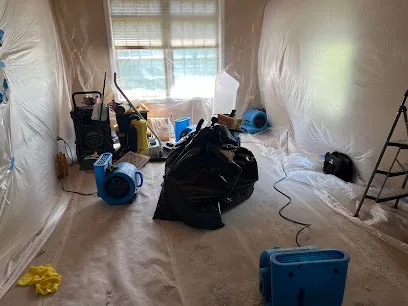
Containment is where many projects succeed or fail. For your Woodbridge home or rental, ask how they will separate work areas from the rest of the structure. Concrete details matter: plastic barriers, dust control, and how they prevent debris from traveling through hallways and returns. Then ask for what the final work documentation will show—so you’re not left guessing after the crew leaves.
Good remediation partners treat containment as part of the written scope, not as “we’ll try our best.” If New England Restoration LLC can’t clearly explain the boundaries they plan to set for your affected rooms, you should pause before approving cleanup.
Ask whether mold testing and the report are included (and why)
Public listings for New England Restoration LLC indicate mold testing and indoor air quality testing may be part of the service offering. Before you pay, clarify what testing means for your project. For example: Are they testing before remediation to document conditions? Are they testing after remediation to verify results? And will you receive an actual written report that you can keep for records or insurance claims?
If someone says “testing is available” but can’t describe when it happens and what decisions it will drive, treat that as incomplete. Testing should reduce uncertainty, not add cost without a clear purpose.
Make the scope match the material level of the damage
The remediation approach changes depending on what got wet and for how long. When you discuss your job with the team at 16 Diana Dr, ask them to identify whether the impacted materials are mostly surface-level (for example, easy-to-clean surfaces) or whether porous materials may need removal. This is especially important for drywall, insulation, and carpeting—where lingering moisture can keep conditions favorable for regrowth.
Also ask how they handle debris and affected materials during cleanup. The best plans specify what will be removed, what will be cleaned, and what gets sealed or replaced. If the proposal sounds vague about what’s included, request a written work scope before work starts.
Drying, monitoring, and timelines should be part of remediation—not an add-on
Mold remediation typically relies on more than removal. Ask how they manage drying and whether they use monitoring tools (not just “it feels dry”). Also ask for the timeline you should expect from inspection to containment setup, removal, drying, and any post-remediation documentation.
Even if visible mold is gone quickly, skipping drying and verification increases the chance of recurring odor, staining, or new growth.
Use these “fit” checks before you approve the work
When you call +1 203-404-5826 or review the company details online, use a simple approval standard: you should be able to map their plan to your problem. Here are the minimum fit checks:
1) They can explain the moisture source and the steps to stop it.
2) Containment boundaries are specific enough to understand before work starts.
3) Mold testing/reporting is described with timing and purpose (pre, post, or both).
4) The scope matches affected materials and debris handling.
5) Drying and monitoring are included with a realistic timeline.
If you can get clear answers to these points, you’ll have a much easier time comparing bids and protecting your property. Mold cleanup should leave you with both a restored space and documentation you can rely on later.
More field postings
- Property Recovery 911 in Philadelphia: Decide Between a Mold Report and Remediation Property Recovery 911 lists mold remediation and water mitigation in Philadelphia. Use this guide to define whether the next decision is ins…
- DryDocs Restoration in Philadelphia: Connect Water Damage to Mold Remediation Scope DryDocs lists water extraction, structural drying, water damage restoration, and mold remediation. Use those service signals to clarify wher…
- MSR Restoration in Philadelphia: Prepare for a Mold Inspection Report Use MSR Restoration’s published inspection and remediation sequence to prepare a useful mold assessment, understand its limits, and decide w…