Home Field postings Mold Remediation Guides
High Quality Restoration (Rochester, NY): Mold Remediation Scope Checks Before You Approve Cleanup
Learn what to verify about mold remediation scope, containment, drying/verification, and documentation when hiring High Quality Restoration in Rochester, NY.
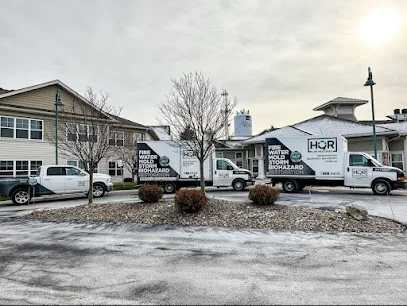
Mold remediation is rarely solved by removing visible growth alone. In many Rochester, NY homes, mold is the sign—not the cause—of an ongoing water damage problem. That’s why your first goal when you contact a restoration company should be to confirm the “moisture pathway” plan that connects the leak, the affected materials, and the final verification step.
For High Quality Restoration, public contact information lists water, fire, and mold response services, including mold remediation, along with a Rochester address and phone number: 1184 Emerson Street, Suite 2, Rochester, NY 14606, and 585-694-9939. Use those details to reach them and, more importantly, to ground your phone conversation in decisions you can evaluate on paper before any demolition begins.
Start with the written scope: what will change in your building?
Before anyone starts cutting out drywall or disturbing insulation, ask for a written remediation scope that names the affected materials and the work boundaries. For mold jobs, vague scopes are a red flag because they often skip the details homeowners need to understand whether contaminated materials will actually be removed and whether untouched areas will be protected.
In your scope request, listen for specifics such as: which surfaces or cavities are considered impacted, what will be sealed or removed, and how the team will prevent cross-contamination during containment setup. A scope that only lists “mold cleanup” without boundaries doesn’t give you enough leverage to judge the outcome.
Confirm containment is job-specific (not a generic promise)
Containment is the operational difference between a careful remediation job and a cleanup that spreads spores to unaffected rooms. Ask how containment will be built and maintained for your particular layout—especially when the affected area touches hallways, returns, basements, or adjacent closets.
Better answers explain the physical setup and workflow rather than offering reassurance. You want to hear how dust control will be handled while materials are removed, how airflow pathways will be managed, and what steps are used to keep contaminated debris from migrating through the structure.
Demand a moisture-first explanation (the “why” behind the growth)
When remediation starts, you should be able to trace the mold to the moisture source that allowed it to grow. Ask them to describe what water damage they are addressing (for example, a persistent leak, a failed plumbing component, or water intrusion) and what evidence supports that conclusion. Without that link, remediation can become repetitive—mold comes back because the underlying moisture pathway wasn’t fully corrected.
Drying and verification: how do you know the job is actually finished?
Many homeowners assume that once visible mold is removed, the work is done. In practice, materials can remain high in moisture long after demolition. Your goal is to require a drying and verification plan that includes both drying steps and a final check before areas are closed up.
Ask what measurements they will take during drying, how they confirm that materials have reached safe dryness targets, and what “verification” looks like for the spaces that were opened. A remediation that ends without verification can leave behind lingering conditions that allow microscopic mold growth to resume.
Watch for sequencing problems
Good sequencing matters: water damage correction, controlled removal, cleaning, and then drying/verification should align with your specific materials and airflow conditions. If the plan jumps directly to cleaning without addressing the active moisture issue, you may be paying for surface work instead of remediation.
Documentation and handoff: what you should receive at the end
Before work wraps, request documentation that matches what you approved. Even if you don’t need every technical detail, you should at least be able to see which areas were treated, what materials were removed or left in place, what drying/verification steps were completed, and what safeguards were used during containment.
Keep this as your “job record” for insurance follow-up, future repairs, or warranty questions. When you have documentation, you can evaluate whether the remediation outcome corresponds to the scope—not just the appearance of the space.
Use the contact details to validate fit before contact
If you’re deciding whether High Quality Restoration is the right team for a mold remediation project in Rochester, NY, start by calling 585-694-9939 and tying each question back to your situation: what caused the water damage, what areas look affected, and what you need confirmed in writing. You can also reference the official contact page at https://hqrdry.com/contact, which lists fire & smoke, water damage, storm damage, mold remediation, and related emergency flood response information.
Mold remediation succeeds when the moisture pathway is corrected, containment is tailored to the space, and verification proves the materials are ready to be safely closed. Your safest next step is to ask for a scope that connects all three—and to approve only what is clearly documented.
More field postings
- Property Recovery 911 in Philadelphia: Decide Between a Mold Report and Remediation Property Recovery 911 lists mold remediation and water mitigation in Philadelphia. Use this guide to define whether the next decision is ins…
- DryDocs Restoration in Philadelphia: Connect Water Damage to Mold Remediation Scope DryDocs lists water extraction, structural drying, water damage restoration, and mold remediation. Use those service signals to clarify wher…
- MSR Restoration in Philadelphia: Prepare for a Mold Inspection Report Use MSR Restoration’s published inspection and remediation sequence to prepare a useful mold assessment, understand its limits, and decide w…