Home Field postings Mold Remediation Guides
Green Restoration of Fairfield County: Stamford Mold Remediation Scope and Containment Decisions
A practical editorial guide to evaluating mold inspection, moisture control, containment, and clearance questions for Green Restoration of Fairfield County in Stamford.
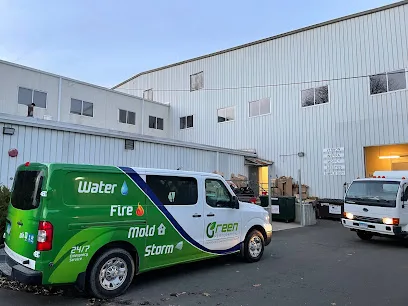
Mold remediation decisions become easier when a property owner separates the visible growth from the moisture problem that allowed it to develop. Green Restoration of Fairfield County is listed at 47 Cedar St, Stamford, CT 06902, and its public service category is Water Damage Mold Remediation. Those details provide a useful starting point, but the right scope still depends on where moisture entered, which materials are affected, and how far contamination may have traveled.
The company’s Stamford mold-remediation information describes inspection, containment, remediation, and clearance testing as distinct parts of the process. That distinction matters after a leak, basement dampness, HVAC condensation, or an attic ventilation problem. A careful comparison should focus less on a broad promise to “remove mold” and more on the evidence, controls, and documentation that will support each proposed task.
Moisture diagnosis should lead the Stamford work plan
Cleaning visible staining without addressing the source can leave a property vulnerable to recurrence. Before approving remediation, the owner should ask what the inspection will examine: plumbing or roof leaks, foundation seepage, condensation, bathroom exhaust, humidity, or another pathway. The Stamford service page describes moisture diagnosis as part of its stated IICRC S520-aligned process, alongside moisture measurement and air sampling. The important practical question is whether the findings will be explained in a written report that connects readings to recommended work.
Green Restoration’s public contact page identifies mold remediation and mold inspection among its services, while the Stamford page discusses same-day inspection response across Fairfield County. Availability can change, so a caller should confirm the response window for the specific property rather than assume that a same-day visit is guaranteed. The address and service listing also help a homeowner distinguish this local Fairfield County record from similarly named restoration providers.
Containment defines how cleanup protects unaffected areas
Containment is not merely a plastic sheet placed near a damaged wall. The Stamford information describes HEPA-filtered negative-air equipment and poly barriers as elements of its remediation approach. During a real project, the owner should ask which rooms or building assemblies will be isolated, where equipment will exhaust, how workers will move in and out, and how dust or debris will be controlled. These questions are especially relevant in connected basements, multi-unit buildings, finished walls, and areas served by shared air systems.
The proposed scope should identify whether porous materials such as drywall, insulation, carpet, or ceiling tile are being removed, cleaned, or left in place, and why. It should also distinguish antimicrobial treatment from physical removal and HEPA cleaning. Those terms describe different actions; using them interchangeably can make an estimate difficult to compare. A written plan should name affected materials, containment boundaries, cleaning methods, exclusions, and the point at which reconstruction may begin.
Clearance testing should be independent and clearly defined
Testing is another area where precision matters. The company’s Stamford page states that it uses third-party clearance air sampling after remediation, and it references ACAC-certified independent clearance verification. A property owner should confirm who selects the tester, what samples are collected, what standard or condition is being applied, and whether the clearance report is delivered directly to the owner. Testing should not be treated as a substitute for fixing the moisture source or removing materials that cannot be adequately cleaned.
For an insurance-related loss, documentation can be just as important as the cleanup itself. Green Restoration’s official contact page says its local franchise locations can provide a damage assessment, transparent estimate, and direct insurance billing, but the exact handling of a claim should be confirmed for the Stamford project. Owners should retain photographs, moisture maps, laboratory or clearance reports, the itemized scope, and any changes approved during the work.
A focused call creates a more useful first conversation
When contacting Green Restoration of Fairfield County, have the property address, the date and source of any water event, affected rooms, visible materials, odor observations, and photographs ready. The local record lists +1 203-674-9573; the official contact page also offers online contact options. A caller can use that information to ask about inspection timing, containment design, testing arrangements, estimate format, and whether emergency water mitigation must occur before mold work.
No single service description can determine the correct remediation plan for every Stamford building. The strongest decision comes from matching the observed moisture pathway to a documented scope, defined containment, appropriate material handling, and a clearly explained clearance process. Those checkpoints give homeowners and property managers a practical way to compare Green Restoration of Fairfield County with the needs of the particular property before authorizing work.
More field postings
- Property Recovery 911 in Philadelphia: Decide Between a Mold Report and Remediation Property Recovery 911 lists mold remediation and water mitigation in Philadelphia. Use this guide to define whether the next decision is ins…
- DryDocs Restoration in Philadelphia: Connect Water Damage to Mold Remediation Scope DryDocs lists water extraction, structural drying, water damage restoration, and mold remediation. Use those service signals to clarify wher…
- MSR Restoration in Philadelphia: Prepare for a Mold Inspection Report Use MSR Restoration’s published inspection and remediation sequence to prepare a useful mold assessment, understand its limits, and decide w…