Home Field postings Mold Remediation Guides
Ercolano Cleaning & Restoration Mold Remediation in North Haven, CT: What to Confirm Before Cleanup Starts
If you’re dealing with mold after water damage, the right remediation plan depends on documentation, containment boundaries, and drying/monitoring—not just visible growth.
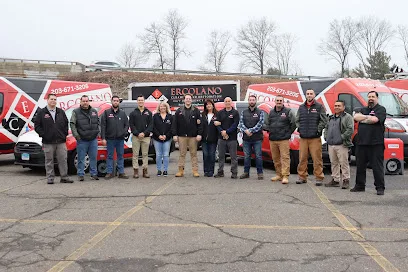
Mold remediation goes wrong most often when the work order is built around what you can see, instead of what caused the moisture problem in the first place. For homeowners in North Haven dealing with mold after water damage, the safest starting point is to insist on a controlled process—inspection notes that match the conditions, clear containment boundaries, and drying steps that continue long enough to remove the moisture that feeds regrowth.
Ercolano Cleaning & Restoration (3 Powdered Metal Dr A, North Haven, CT 06473, United States; +1 203-671-3206) positions itself as a restoration contractor focused on water damage mold remediation, and its official site describes a workflow that includes isolating and containing affected areas along with equipment-based cleaning methods. Use that as a baseline, then verify the details for your specific rooms before anyone starts demolition.
Start with the moisture path, not the stain
When mold appears, it’s usually the result of water intrusion—slow leaks, condensation, plumbing failures, or past flooding—that left materials damp long enough for spores to establish. Ask your remediation contractor to explain what they believe the moisture source is and which building materials are likely affected (drywall cavities, subflooring, insulation, or framing). You’re looking for a narrative that connects the visible mold to an actual water pathway you can observe or confirm.
Ercolano’s site highlights using thermal imaging to detect hidden leaks, then stopping the source, extracting water, dehumidifying, and drying affected areas. Even if you already know where water entered, you still want to hear how they will confirm that hidden moisture is gone before cleanup transitions to repairs.
Containment has to be documented room by room
“Containment” shouldn’t be a slogan. In a real scope, you should be able to point to where isolation begins and ends for each affected room, and what steps prevent cross-contamination during removal. Before work starts, ask what containment looks like for your layout: doorways, HVAC pathways, and whether negative pressure or air scrubbing is part of the plan.
On Ercolano’s website, mold remediation is described as isolating and containing affected areas and using equipment such as HEPA vacuuming and air scrubbing along with dehumidification. Your job is to translate those general statements into your property’s boundaries. Request that they list which materials will be removed, what remains in place, and how debris handling will be managed to avoid spreading spores to unaffected zones.
Insist on the work order details that match your insurance needs
If you’re working with a carrier or a property manager, ask for written documentation of the assessment and the remediation scope. Look for clarity on what was found, what was targeted, and what will be done next. A good remediation plan lists the affected areas, the containment approach, and the sequence from removal/cleaning to drying. That documentation becomes critical when you later need proof that the moisture problem was addressed, not just the mold surface.
Drying and monitoring are part of the remediation, not an add-on
Even after visible materials are removed, hidden moisture can remain in wetted assemblies. Ask how drying will be measured and verified—what readings they take, how long they expect monitoring to continue, and how they decide when it’s safe to move forward. If they can’t explain the measurements, they can’t confidently claim the job is complete.
Ercolano’s site describes dehumidification and “thoroughly dry affected areas” as part of water restoration, with mold remediation focused on eliminating mold growth and sanitizing the space. Translate that into your project by asking what drying equipment will be used in each affected area and what criteria determine when containment can be reduced and cleanup can conclude.
What to ask before you agree to the plan
To avoid scope gaps, prepare questions that force specifics:
1) What moisture readings or inspection findings support their diagnosis of the mold source?
2) How will they establish containment boundaries for each room, and what prevents air movement into clean areas?
3) What equipment-based cleaning steps are included (for example, HEPA vacuuming and air scrubbing), and what materials are expected to be removed versus cleaned in place?
4) How will they document drying progress and completion so you don’t get regrowth after repairs?
You can reach Ercolano Cleaning & Restoration by phone at +1 203-671-3206 or via its official site at https://www.ercolanocleaningrestoration.com/?utm_source=google&utm_medium=organic&utm_campaign=gbp. Use those entry points to confirm that the approach described publicly becomes a written, room-specific scope for your home or property.
Mold remediation is ultimately about controlling moisture and controlling exposure during cleanup. If your contractor can clearly connect inspection findings to containment, drying, and documentation, you’ll be in a stronger position to stop the cycle that causes mold to return.
More field postings
- Property Recovery 911 in Philadelphia: Decide Between a Mold Report and Remediation Property Recovery 911 lists mold remediation and water mitigation in Philadelphia. Use this guide to define whether the next decision is ins…
- DryDocs Restoration in Philadelphia: Connect Water Damage to Mold Remediation Scope DryDocs lists water extraction, structural drying, water damage restoration, and mold remediation. Use those service signals to clarify wher…
- MSR Restoration in Philadelphia: Prepare for a Mold Inspection Report Use MSR Restoration’s published inspection and remediation sequence to prepare a useful mold assessment, understand its limits, and decide w…