Home Field postings Mold Remediation Guides
EnviroClean South Portland: Why an Inspection Report Should Lead Mold Remediation
A practical look at using EnviroClean’s South Portland location, inspection reporting, and water-damage context to define a clearer mold remediation conversation.
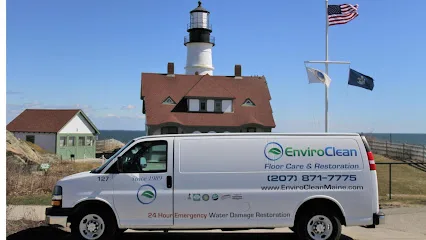
When a property owner notices a musty odor, staining, or suspected growth after a leak, the first useful decision is not always choosing a cleanup package. It is defining what needs to be inspected, documented, and corrected. EnviroClean - South Portland is listed under “Mold Inspection & Report Specialist,” giving homeowners and property managers a reason to begin with scope and evidence rather than assumptions.
The available business information connects this location with mold remediation, water damage restoration, safety equipment, and inspection reports. Those signals do not establish the details of every project, so the initial conversation should focus on the building, the moisture event, and the specific documentation the customer needs.
South Portland’s location makes the first call a logistics decision
EnviroClean’s listed office is at 170 John Roberts Rd STE 12, South Portland, ME 04106, United States. That address is useful when arranging access, identifying the correct service location, or deciding whether a property falls within the company’s current working area. The official contact information also lists service coverage across central and southern Maine, including South Portland, Portland, Scarborough, Cape Elizabeth, and nearby communities; coverage and scheduling should still be confirmed directly for the property in question.
For a rental, condominium, or commercial space, the caller should have the property address, access instructions, affected rooms, and any tenant or building-manager requirements ready. A short description of the event—such as a roof leak, plumbing failure, flooding, or persistent humidity—can help distinguish an active water-damage issue from a later mold investigation.
An inspection report should separate observations from the remediation scope
A useful inspection discussion should identify where visible or suspected mold is located, which materials may be affected, and whether the moisture source has been stopped. It should also clarify what the report will include. For example, will it document room locations, damaged materials, containment recommendations, cleaning steps, or areas that require additional evaluation?
That distinction matters because a visible patch is not necessarily the full extent of a problem. At the same time, a broad promise to remove “all mold” is not a substitute for a defined work area. Before approving remediation, the customer can ask EnviroClean which findings are confirmed observations, which are recommendations, and which issues remain outside the proposed scope.
Water damage changes the questions a property owner should ask
Mold remediation following water damage requires more than treating a surface. The source and duration of the moisture can affect wall cavities, flooring, insulation, contents, and adjacent rooms. A homeowner should ask whether drying or water-damage restoration is part of the same proposal, a separate service, or work that must be completed by another party before remediation begins.
It is also sensible to ask how removed materials will be identified, how clean areas will be protected, and whether testing or clearance is included or arranged separately. These questions are not requests for a guaranteed outcome. They are ways to make the project boundaries understandable before work starts.
Containment and safety details deserve written answers
The business information highlights safety equipment and containment as relevant mold-remediation signals. Customers should turn those broad signals into concrete questions: Where will the containment boundary be placed? How will air movement be managed? Which rooms or pathways will be unavailable during the work? How will debris and removed materials leave the building?
For an occupied home, these details affect daily routines and access. For a business, they may affect employees, customers, inventory, and operating hours. The written scope should identify the work area, preparation requirements, expected sequence, exclusions, and the party responsible for addressing any underlying moisture problem.
Use the phone call to test fit, not just availability
EnviroClean’s listed office phone is +1 207-871-7775. A focused call can establish whether the company is the right fit for the concern before an appointment is scheduled. The caller can explain the building type, the suspected source of moisture, the approximate affected area, and whether an inspection report is needed for an owner, insurer, tenant, or property manager.
Before relying on any service, pricing, emergency response, certification, insurance, warranty, or testing claim, the customer should request current terms directly. The official contact page identifies mold remediation and water-damage restoration among the services, but project availability and exact deliverables can vary.
A clear written scope is the useful endpoint
The strongest outcome of the first conversation is not a generic estimate. It is a shared description of the problem and the next decision. For EnviroClean - South Portland, that means connecting the inspection report to the suspected moisture source, containment plan, affected materials, timeline, and follow-up questions. With those points in writing, a property owner can compare proposals more fairly and avoid approving work that leaves the source or project boundaries unclear.
More field postings
- Property Recovery 911 in Philadelphia: Decide Between a Mold Report and Remediation Property Recovery 911 lists mold remediation and water mitigation in Philadelphia. Use this guide to define whether the next decision is ins…
- DryDocs Restoration in Philadelphia: Connect Water Damage to Mold Remediation Scope DryDocs lists water extraction, structural drying, water damage restoration, and mold remediation. Use those service signals to clarify wher…
- MSR Restoration in Philadelphia: Prepare for a Mold Inspection Report Use MSR Restoration’s published inspection and remediation sequence to prepare a useful mold assessment, understand its limits, and decide w…