Home Field postings Mold Remediation Guides
EC Restore in Smithfield, RI: What to Verify Before Mold Remediation Starts After Water Damage
Learn what to verify with EC Restore—moisture mapping, containment, drying proof, and scope boundaries—before mold remediation begins in Smithfield, RI.
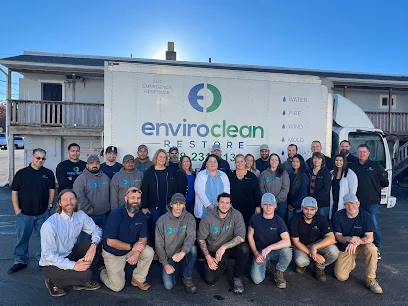
Mold remediation decisions are rarely solved by visible cleanup. If water damage has affected drywall, flooring, or hidden cavities, the real risk is that moisture—and the mold it can feed—keeps spreading even after the stained areas look “better.” For homeowners in the Smithfield, RI area considering EC Restore, the smartest approach is to confirm how the company plans the work, controls the environment, and proves that drying is complete before closure.
Start with the moisture-source story (not the stain)
Before any containment setup, ask how EC Restore will identify the moisture source and the affected material boundaries. Effective mold remediation begins with moisture mapping or an equivalent documentation process that answers: What materials are wet, how far did the water travel, and what caused the moisture to persist?
Be specific about where the water originated (a leak, flooding, HVAC condensation, or a plumbing failure) and whether materials were removed or dried right away. With restoration and water-damage mold work, timing matters because mold growth can develop behind surfaces and inside assemblies.
For reference, EC Restore is listed at 41 Cedar Swamp Rd, Smithfield, RI 02917, and you can reach them at +1 401-389-4347 to discuss documentation, the remediation sequence, and next steps. Their site is shown as http://www.ecrestore.com/.
Containment should match your rooms, not be generic
Once the moisture-affected zones are understood, containment is the next decision point. You want a plan that protects unaffected areas while work occurs—especially if the job involves removing moldy drywall, insulation, or other porous materials. Ask what containment method they use, how they maintain negative pressure (if applicable), and how they prevent cross-contamination during removal and cleanup.
Also ask about housekeeping and what happens to debris during the job. Even when a contractor does “mold removal,” your outcome depends on whether the work area is controlled with consistent procedures: sealed entrances/exits, proper bagging, and controlled airflow so spores are not pushed into clean spaces.
Separate mold removal from drying proof—and ask what “complete” means
A common failure mode after water damage is closing the project too early. In a sound workflow, remediation is paired with verifiable drying so affected assemblies return to safe, stable conditions. Instead of relying on appearance alone, ask how drying is measured and documented.
Clarify whether they use moisture meters or other measurements and how they confirm that materials are dry enough for reconstruction or closure. You should also understand the difference between “we removed what we can see” and “we proved moisture is gone where mold could have grown.” If you’re planning repairs, request the drying documentation before re-installing finishes.
Clarify scope boundaries: what’s included, what’s excluded
Before work begins, request a written scope that spells out which tasks EC Restore will handle. For water damage mold remediation, scope should typically include inspection/documentation, containment setup, removal of affected materials, cleaning/sanitization steps as appropriate, drying verification, and project closure. Equally important are exclusions—such as repairs/reconstruction beyond remediation, specialty work that requires separate trades, or situations where testing is needed to confirm conditions.
Since public listing data describes EC Restore as supporting water damage restoration and mold remediation, your goal is to ensure their scope matches your situation (for example, whether you’re dealing with a small localized leak or a larger moisture-affected area).
Questions that help you judge readiness to start
Use these questions when you contact EC Restore at +1 401-389-4347:
1) What moisture-source documentation will you produce before containment?
2) How will you define the remediation boundaries—room by room and material by material?
3) What containment steps will you use, and how do you prevent cross-contamination?
4) How do you measure and document drying proof before closure?
5) What is included in remediation versus excluded from the written scope?
When a contractor can clearly explain moisture mapping, controlled containment, and drying proof, you’re more likely to avoid the “cleanup today, problem returns later” cycle. For mold remediation after water damage, that clarity is the decision-making advantage—especially when you’re choosing who will manage the job in Smithfield, RI.
More field postings
- Property Recovery 911 in Philadelphia: Decide Between a Mold Report and Remediation Property Recovery 911 lists mold remediation and water mitigation in Philadelphia. Use this guide to define whether the next decision is ins…
- DryDocs Restoration in Philadelphia: Connect Water Damage to Mold Remediation Scope DryDocs lists water extraction, structural drying, water damage restoration, and mold remediation. Use those service signals to clarify wher…
- MSR Restoration in Philadelphia: Prepare for a Mold Inspection Report Use MSR Restoration’s published inspection and remediation sequence to prepare a useful mold assessment, understand its limits, and decide w…