Home Field postings Mold Remediation Guides
BioClean in West Haven, CT: Mold Remediation Scope Questions to Confirm Before Cleanup Starts
Learn what to verify with BioClean before mold remediation—starting with moisture control, documented containment, and what testing or air-quality checks should be included.
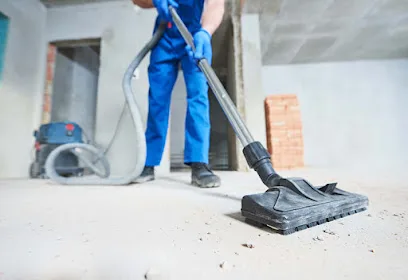
When homeowners see mold in a home in West Haven, CT, the instinct is often to focus on the visible growth. But effective mold remediation has to begin earlier than “scrubbing.” If moisture keeps feeding the problem, new growth can appear even after the affected materials look clean. For that reason, the most useful way to evaluate any mold remediation provider is to pressure-test their process: what they inspect, how they document containment, and how they verify that the work actually solved the water-damage root cause.
BioClean lists an address at 88 Farwell St, West Haven, CT 06516, United States, and a phone number of +1 203-283-3912. Their official site also frames service around water damage restoration, inspections, and mold remediation in the area, including the idea that proper testing supports the conclusion that a space is mold-free. Below are the specific questions that best match that kind of mold job—so you can compare proposals with clarity.
Start with the moisture path: “What caused the water damage here?”
Ask BioClean to explain the moisture history for your exact location in the home. Your goal is not a general statement like “we’ll handle the mold,” but a causal chain that ties together the leak source (plumbing, roof, humidity/condensation, flooding, or a recent water intrusion event), the timeline, and what materials were exposed. The best remediation plan should identify what must be stopped first, because mold is usually downstream of a continuing moisture problem.
What should be included in the inspection notes?
Request written inspection documentation that names affected areas and affected material types (for example, drywall, insulation, subflooring, or other porous components). In the West Haven market, where basement moisture and damp conditions are common points of concern, you should also confirm whether the inspection addresses crawlspaces or basements when those are part of the moisture story. BioClean’s site highlights inspections as part of their service approach, so insist on a concrete written result rather than only verbal explanations.
Containment should be room-specific—and documented
“Containment” cannot be a vague promise. It has to describe what boundaries will be created and how work areas will be controlled so mold spores do not spread to unaffected rooms. Before remediation begins, ask how containment is set up for your particular layout (which rooms or zones are isolated, how entry/exit is managed, and what materials are expected to be removed vs. cleaned in place).
How do they prevent cross-contamination during cleanup?
Ask for details that show containment is planned, not improvised—such as how they stage tools and waste, how they sequence demolition/removal when needed, and how they handle transitions between affected and unaffected spaces. If the provider cannot clearly describe the boundaries, that’s a red flag for mold remediation quality.
Testing and verification: “What proves the mold problem is gone?”
After visible mold is removed, the real decision point is verification. BioClean’s official site discusses air-quality testing and a lab testing approach as part of ensuring the area is mold-free. Use that as your comparison standard: ask whether testing/verification is included, what type of testing is offered (and whether there is a separate phase for verification), and what deliverables you will receive in writing.
What should happen after remediation to confirm results?
In many mold remediation scenarios, drying and monitoring are part of the cleanup workflow, especially when water damage was involved. Ask how drying is handled (what drying equipment is used, for how long, and what will be monitored) and whether they will re-check conditions after materials are removed. You want the final phase to match the scope—not “we cleaned it” but “we verified it.”
Water damage and durability: “What prevents it from coming back?”
If the job is truly water damage mold remediation, prevention is not optional. Ask BioClean what they recommend to reduce the chance of repeat moisture intrusion, including practical steps tied to the root cause they found. Their public materials highlight water damage restoration themes and basement-related concerns, so you should ask directly whether recommendations differ for your case (for example, addressing leaks, managing moisture sources, or supporting areas that stay damp).
Clarify the scope boundaries in writing
Before signing anything, ask for a written scope that ties together inspection findings, containment boundaries, remediation steps, drying/monitoring expectations, and verification deliverables. This is also where you should confirm the inclusion or separation of testing, documentation, and any follow-up needs. If something is not written, it is easy for it to disappear from the actual work.
If you’re comparing mold remediation providers in West Haven, the strongest signal is consistency: the inspection explains the moisture cause, containment is described room-by-room, and testing or verification is defined as part of the conclusion—not an afterthought. Use these questions with BioClean at 88 Farwell St or by calling +1 203-283-3912 to make sure your project is built around moisture control and proven results.
More field postings
- Property Recovery 911 in Philadelphia: Decide Between a Mold Report and Remediation Property Recovery 911 lists mold remediation and water mitigation in Philadelphia. Use this guide to define whether the next decision is ins…
- DryDocs Restoration in Philadelphia: Connect Water Damage to Mold Remediation Scope DryDocs lists water extraction, structural drying, water damage restoration, and mold remediation. Use those service signals to clarify wher…
- MSR Restoration in Philadelphia: Prepare for a Mold Inspection Report Use MSR Restoration’s published inspection and remediation sequence to prepare a useful mold assessment, understand its limits, and decide w…