Home Field postings Mold Remediation Guides
Anthony’s Abatement in West Hartford: Mold Testing & Remediation Fit—What to Verify Before Work Starts
Learn the specific remediation details to confirm with Anthony’s Abatement in West Hartford, CT—especially containment and drying verification—before work begins.
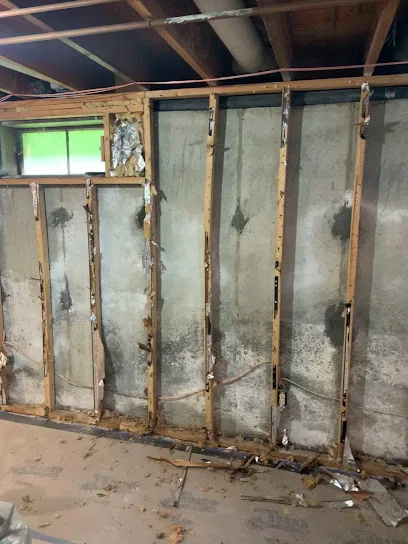
Mold problems in a home often begin with water damage long before anyone sees a stain. When you’re deciding whether Anthony’s Abatement at 41A Grassmere Ave, West Hartford, CT 06110 is the right team for remediation, the best question isn’t simply “Do you remove mold?”—it’s whether their process is built to document the problem, contain the work, and verify that drying is complete after cleanup.
This guide is focused on real checkpoints most homeowners should confirm when mold appears after leaks, flooding, or recurring moisture. Anthony’s Abatement describes hazardous-material services including mold removal and mold testing. The practical challenge is making sure those services translate into a clear scope for your specific rooms, materials, and moisture conditions.
Match the remediation plan to the moisture source in your home
Before remediation, your contractor should be able to explain what caused the moisture conditions that allowed mold to grow. If the “water problem” is still active—coming from plumbing, roof leaks, condensation, or poor ventilation—cleanup alone usually underperforms. The vendor you choose should tie the remediation plan to the evidence of the moisture source, not only to visible growth.
Anthony’s Abatement’s public service descriptions note mold removal as part of broader abatement work along with materials testing. For your project, confirm how that testing or assessment connects to a room-by-room scope: which areas are treated, which materials are addressed, and which steps are repeated if moisture is still present.
Containment should reflect West Hartford home layout, not just a basic setup
Containment is one of the most important “fit” signals in mold remediation because it limits cross-contamination during removal and cleanup. A generic containment plan—or one that only references plastic sheeting—doesn’t fully address the risks in an actual home.
In a clear plan, containment should be described as an operational workflow that fits your layout: what gets isolated, how airflow is managed, how debris is handled, and when containment can be removed. When you compare contractors, treat containment documentation as a measurable deliverable rather than a vague promise.
Separate mold removal from verification—especially drying proof
Homeowners often focus on removal, but verification is usually the deciding factor. Even after cleaning, mold-related odors and recurring staining can return when hidden moisture remains in drywall, subfloor assemblies, framing, insulation, or other porous materials.
Ask whether the team provides drying verification, not just visual checks. You should be able to confirm that materials reached target moisture conditions and stayed there long enough to support a stable post-remediation environment. If the contractor can’t explain how they verify drying or can’t document what they measured, that’s a warning sign for project fit.
Clarify what “mold testing” means for your project before scheduling
Anthony’s Abatement lists mold testing among its services. Still, “testing” can be used in different ways. The fit test is whether testing is used to guide the remediation plan and whether it supports decision-making—for example, determining scope before work begins and confirming outcomes after remediation.
Before remediation starts, clarify when testing happens (before remediation, after remediation, or both), what sampling approach is being used, and how results will translate into actions. In other words: what changes in the remediation plan if results are higher than expected?
Get a written scope that covers the workflow, materials, and timing
Because remediation work can affect occupied spaces, a written scope is a key protection. Request documentation that spells out what will be done, which materials are included, the anticipated workflow segments (assessment, containment, removal, drying, and cleanup), and what is excluded. This matters even more if your remediation is connected to insurance claims, property transfers, or a time-sensitive closure.
If you’re reaching out, you can call +1 860-606-4639 and reference the address and your moisture history so the team can align the assessment to your situation.
Use these fit signals to choose the right next step in West Hartford
The right contractor is the one who connects moisture-source investigation to containment design and verification. For mold remediation in West Hartford, CT, strong indicators are not marketing language—it’s the ability to provide an organized plan, document scope by affected areas, explain how moisture will be confirmed as resolved, and describe how mold testing (if included) will be used to guide and validate outcomes.
For many homeowners, the best first appointment is the one where the contractor treats remediation as a measurable process: identify the moisture problem, contain the work, remediate affected materials, and verify results. When those pieces align, you’re more likely to avoid repeated cleanup cycles and move forward with greater confidence.
More field postings
- Property Recovery 911 in Philadelphia: Decide Between a Mold Report and Remediation Property Recovery 911 lists mold remediation and water mitigation in Philadelphia. Use this guide to define whether the next decision is ins…
- DryDocs Restoration in Philadelphia: Connect Water Damage to Mold Remediation Scope DryDocs lists water extraction, structural drying, water damage restoration, and mold remediation. Use those service signals to clarify wher…
- MSR Restoration in Philadelphia: Prepare for a Mold Inspection Report Use MSR Restoration’s published inspection and remediation sequence to prepare a useful mold assessment, understand its limits, and decide w…