Home Field postings Mold Remediation Guides
All Dry Services of Greater Boston West: Confirming Mold Remediation Scope, Containment, and Documentation
A Boston-area decision guide for your call: link mold to the moisture cause, understand containment for real room layouts, and confirm reporting that supports closure.
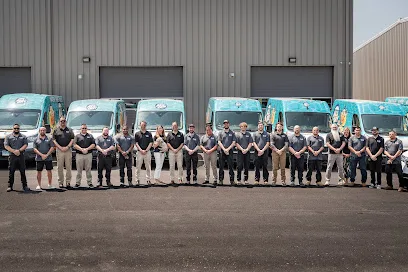
When visible mold shows up in a home, many people first focus on the stains or odor. But a strong remediation plan starts one step earlier: identifying what caused the moisture in the first place and making sure the cleanup approach matches that cause. If you’re contacting All Dry Services of Greater Boston West, use your first conversation to connect the mold problem to the underlying water damage and to confirm how the work area will be kept safe.
Public information for this business includes an address reference at Riverside Center, 275 Grove St #2400, Auburndale, MA 02466, a phone number at +1 774-224-8522, and a local page at https://www.myalldry.com/greater-boston-west-massachusetts/. Treat these details as a starting point, not as proof of today’s exact job scope. Ask questions that translate their proposed remediation steps into a clear, written plan you can understand and use later.
Ask for the moisture “origin story” tied to your actual damage
Request a clear explanation of what they believe triggered mold growth. In water-damage situations, mold typically follows a period of elevated moisture—after a leak, flooding, sewage backup, or prolonged humidity. A credible approach should explain what they will inspect (for example, affected building materials and moisture pathways) and how they determine where the problem began rather than focusing only on what is visible.
At this stage, ask whether they treat the job as water mitigation first, mold remediation second, or as a combined workflow. If their answer is general, ask for specifics: which materials are likely impacted, what measurements they’ll use, and what will be documented for your records.
Containment should fit the home’s layout and airflow—not generic assurances
Containment helps limit where contaminated air and debris can travel during mold work. Before any demo begins, ask how containment will be set up for your layout—especially if the affected area is near living spaces, HVAC returns, or shared hallways.
Because homes vary, containment should be explained in terms of your job conditions: work zone boundaries, airflow considerations, and how debris is managed during removal and cleanup. If the response stays at the “safety” level but doesn’t connect to your specific rooms and pathways, ask for a written scope section that clarifies the containment plan.
Make the documentation pathway explicit: inspection/report first, then decisions
Mold inspection can sound straightforward, but the report and the decisions it supports matter most. Ask how their inspection/report process works, including what triggers testing (if testing is used), what kind of results you receive, and how those results change the remediation decisions.
This Greater Boston West listing emphasizes mold inspection and report-related support. Use that to set expectations: ask when you’ll receive documentation, what photos or notes will be included, and how they verify a “done” state. For example, clarify what they consider complete after cleaning and drying are finished.
Clarify what they will clean versus what may need removal
Not every mold-impacted surface is handled the same way. Some areas may be cleanable once moisture control is addressed, while other materials may need removal when contamination has penetrated porous building components. During your call, ask them to explain what they expect to remediate in place and what they expect to remove.
To reduce confusion, ask them to translate the plan into measurable scope language: which surfaces will be cleaned, which materials may be removed, and how they prevent cross-contamination during the transition from demolition to cleanup. You’re looking for plain-English clarity that matches your situation, not broad labels.
Plan for real-world timing changes and communication during opening-up work
Even well-prepared projects can change once walls, flooring, or ceilings are opened. Ask how they communicate updates if additional moisture or hidden damage is discovered. You’ll also want to confirm what access they need from you, such as moving items, clearing work areas, or allowing entry for inspection and moisture verification.
Since this business publicly references 24/7 emergency cleanup availability and water-related restoration services on its website, consider asking whether your situation is time-sensitive and how quickly they can mobilize for an inspection. Then connect urgency to evidence: what you should do immediately to reduce further moisture while they assess the full extent (and what not to do while waiting).
Get a clear definition of “remediation complete” before you rely on the word “done”
Before you consider the job complete, ask how they define completion for mold remediation and water-damage cleanup. The best answers should tie back to the documented scope: confirmation of drying progress, verification of containment controls during the work, and closure details that align with the inspection/report pathway you discussed at the start.
If you’re comparing options, keep the criteria consistent: how well they explain the moisture origin reasoning, how specifically they describe containment and airflow controls, and how strongly they document what was found and what was completed. Those details help reduce guesswork—especially if you later need to support insurance documentation or if moisture-related issues resurface.
More field postings
- Property Recovery 911 in Philadelphia: Decide Between a Mold Report and Remediation Property Recovery 911 lists mold remediation and water mitigation in Philadelphia. Use this guide to define whether the next decision is ins…
- DryDocs Restoration in Philadelphia: Connect Water Damage to Mold Remediation Scope DryDocs lists water extraction, structural drying, water damage restoration, and mold remediation. Use those service signals to clarify wher…
- MSR Restoration in Philadelphia: Prepare for a Mold Inspection Report Use MSR Restoration’s published inspection and remediation sequence to prepare a useful mold assessment, understand its limits, and decide w…