Home Field postings Mold Remediation Guides
A1 Water & Mold Removal MA (Somerville/Boston) Mold Remediation Fit Check: Scope, Containment, and Water-Damage Evidence
Use this Somerville/Boston mold remediation fit guide to confirm the contractor’s written scope, containment approach, and testing/report documentation before work begins.
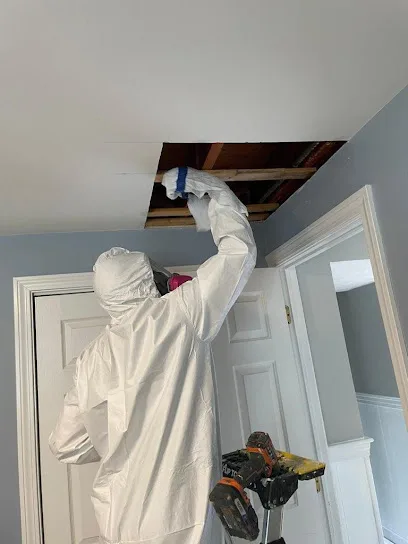
When a leak leads to visible mold, homeowners in the Boston area usually face the same uncomfortable question: “Are we dealing with the mold itself, or the water damage that started it?” A1 Water & Mold Removal MA operates in Somerville and serves the broader Boston market, and its public profile emphasizes mold remediation, water-damage restoration, and mold testing/report work. Still, the real decision comes down to what you can verify in the call and in the written plan—not marketing.
This is a practical fit check for calling this specific provider at 403 Highland Ave, Somerville, MA 02144 (phone +1 617-295-7489, official site https://www.superbrestorationguysofma.com/). It’s designed for readers who want the remediation scope tied to evidence, with containment and verification steps that match the size of the job.
Start with the moisture origin story, then ask what will be proven
Look for a process that treats mold as a downstream result of ongoing dampness. In the written scope, the contractor should connect the remediation steps to the water damage history (for example, what materials were wet, how long they likely stayed damp, and what was documented during inspection or testing).
A1’s public positioning includes mold testing and environmental-style evaluation, which is a good sign for report-driven decisions. For your call, confirm what kind of documentation you will receive and how it will be used to define the removal and cleaning boundaries.
Demand containment decisions that match your layout (not generic “mold removal”)
Containment is where many remediation jobs succeed or fail. Ask the contractor how they will isolate affected areas based on your home’s layout: which rooms will be sealed, how airflow pathways will be handled, and how dust control will be maintained during removal.
Boston-area homes can have complex basements, stairwells, and crawlspace-adjacent areas. Your goal is to ensure the plan accounts for those pathways—especially if drywall, insulation, or subfloor materials are involved. If the contractor cannot describe containment in terms of your specific rooms, you may want to compare another provider.
Clarify the difference between surface cleaning and material removal
A common failure mode is “cleaning” visible spots while the underlying water-damaged materials are left in place. Before work starts, require a clear scope that distinguishes:
• What will be removed (materials impacted by water damage and mold growth)
• What will be cleaned or treated (non-porous or salvageable components)
• What will be dried and how drying will be verified
If the contractor’s scope uses vague language, ask for measurable steps (for example, how drying progress is tracked) and what “done” means at the end.
Inspect the testing/report logic: what triggers remediation changes?
A provider described as a mold inspection & report specialist should be able to explain how findings affect the remediation plan. For example, you want to know what results (or observations) trigger expanded containment, added removal, or follow-up verification.
When mold testing is part of the workflow, ask: Who interprets the findings? Will you get a written report? And does the report include recommendations that change the scope rather than just labeling the presence of mold?
Boston tradeoffs: keep an eye on drying timelines and hidden moisture
In a region with freeze-thaw cycles, leaks don’t always show up immediately. Moisture can travel behind trim, linger in wall cavities, and reappear as temperatures swing. During your planning call, ask how the contractor will address hidden moisture sources and whether the scope includes investigation for common culprits (like ongoing plumbing leaks, HVAC-related condensation, or wet framing areas).
Your remediation plan should also explain how long the drying and verification stage is expected to take and what conditions must be met before you can safely re-occupy the home.
What to ask before you sign: the minimum evidence set
Before committing to A1 Water & Mold Removal MA or any mold remediation contractor, request answers to these concrete points:
1) What evidence supports the scope (inspection findings, moisture history, and any mold testing/report documentation)?
2) How will containment be built and how will airflow/dust be controlled for your specific rooms?
3) What materials will be removed versus cleaned, and what steps verify drying after water damage cleanup?
4) What does “verification” include at the end—how do you confirm the remediation is complete?
If a contractor can’t clearly connect the plan to evidence and containment decisions, it’s a red flag. Mold remediation should feel like a measured, document-backed workflow—especially when water damage may have affected more than what you can see.
More field postings
- Property Recovery 911 in Philadelphia: Decide Between a Mold Report and Remediation Property Recovery 911 lists mold remediation and water mitigation in Philadelphia. Use this guide to define whether the next decision is ins…
- DryDocs Restoration in Philadelphia: Connect Water Damage to Mold Remediation Scope DryDocs lists water extraction, structural drying, water damage restoration, and mold remediation. Use those service signals to clarify wher…
- MSR Restoration in Philadelphia: Prepare for a Mold Inspection Report Use MSR Restoration’s published inspection and remediation sequence to prepare a useful mold assessment, understand its limits, and decide w…