Home Field postings Mold Remediation Guides
SERVPRO of SE Monroe County Mold Remediation: Verify Containment, Moisture Control, and Completion Proof
If you’re dealing with mold after water damage in East Rochester, verify containment setup, drying/moisture source correction, and written scope before cleanup starts.
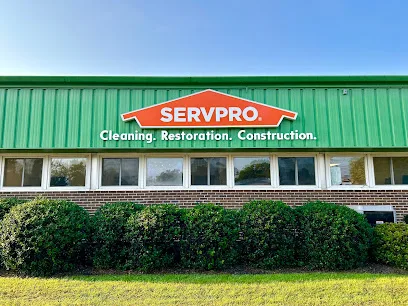
Mold remediation in a home (or commercial space) is rarely just about what you can see. In East Rochester, NY, the safest starting point is making sure the work plan addresses the moisture pathway first—because mold returns when damp conditions are left behind. SERVPRO of SE Monroe County (60 N Lincoln Rd E, East Rochester, NY 14445, United States) positions its services around water damage restoration and mold response, and the decision you make as a homeowner or property manager should reflect that reality. Before crews arrive, use the questions below to confirm that the job is set up to stop spread, document progress, and get to a verifiable end point.
1) Confirm the job is built around water-damage mold removal
Ask whether their inspection and remediation plan treats mold as a result of water damage—not as a standalone “stain problem.” SERVPRO’s local page highlights water damage and mold damage response as core services, so the conversation should align with that framing. The crew should explain what water source is most likely (a leak, hidden condensation, wet drywall, or a storm-related intrusion) and how they’ll verify where moisture traveled before any removal begins.
2) Match containment to your rooms, not just “general cleanup”
During mold remediation, containment is the barrier between a contained work area and the rest of your property. In practice, that means you should hear specifics: what containment method is used, what areas are isolated, and how technicians control dust and debris while removing affected materials. If the plan is vague—“we’ll contain the area”—ask what that includes for your exact layout (hallways, closets, HVAC pathways, or adjacent rooms). A good remediation plan will connect containment to the likely spread route rather than treating the job as one-size-fits-all.
3) Demand drying and moisture-source control with proof
“We cleaned the mold” is not the same as “the moisture problem is over.” Before you sign off, ask how they will prove that drying and moisture control is complete. SERVPRO’s public materials emphasize restoration timing and secondary damage prevention, which should translate into measurable drying steps. In your decision call, ask what monitoring they use, how long they expect drying to take, and what documentation you can review to confirm materials are back to safe conditions.
What to ask for during the remediation
Clarify who performs the moisture checks, whether readings are taken before and after affected material is removed, and how they handle situations where water migrated behind walls or under flooring. If they recommend removal (demolition) as part of remediation, ask for the rationale and boundaries: what will be removed, what will be cleaned, and what will be left in place.
4) Require a clear written scope before any demolition or rebuilding
One of the most important decision points is the scope. If your mold issue overlaps with water damage restoration, insist on a written breakdown of the work. That should include inspection findings that justify the remediation approach, the containment boundaries, the remediation steps, and how cleanup and restoration are sequenced. This is also the moment to confirm coordination if multiple trades are needed (for example, where water damage repairs and mold cleanup overlap).
5) Use the call to reduce risk and avoid rework
When you contact a local provider, you should feel that the team understands the remediation workflow and safety priorities. SERVPRO of SE Monroe County lists a phone line (+1 585-678-5854) and positions itself as available around the clock for restoration-related emergencies. Even so, your best outcome comes from having an organized plan: take photos of affected areas, note when the water event occurred (or when dampness was first noticed), and highlight any history of leaks, flooding, or roof issues.
If you’re evaluating mold remediation after water damage in the East Rochester area, the goal is simple: stop the moisture source, contain exposure during cleanup, and verify completion with documentation—not just visual improvement. Use these decision steps to guide your first call, and you’ll be in a stronger position to protect your property and reduce the chance of repeat mold growth.
More field postings
- Property Recovery 911 in Philadelphia: Decide Between a Mold Report and Remediation Property Recovery 911 lists mold remediation and water mitigation in Philadelphia. Use this guide to define whether the next decision is ins…
- DryDocs Restoration in Philadelphia: Connect Water Damage to Mold Remediation Scope DryDocs lists water extraction, structural drying, water damage restoration, and mold remediation. Use those service signals to clarify wher…
- MSR Restoration in Philadelphia: Prepare for a Mold Inspection Report Use MSR Restoration’s published inspection and remediation sequence to prepare a useful mold assessment, understand its limits, and decide w…