Home Field postings Mold Remediation Guides
Rock Emergency Services (Rochester): Mold Remediation & Inspection Proof Points to Confirm Before Cleanup
Use these mold remediation decision points—inspection outputs, containment, and drying verification—to confirm that Rock Emergency Services can address your water-driven moisture problem in Rochester, NY.
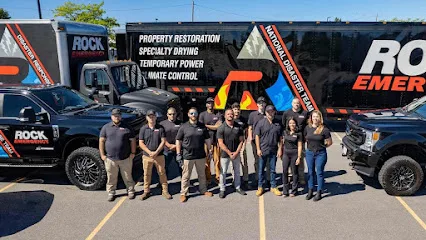
Mold remediation in a home that has experienced a leak or flood usually isn’t solved by scraping visible growth. For Rock Emergency Services in Rochester, NY, the safest way to decide whether they’re the right fit is to verify the steps that connect the moisture source, the inspection findings, and the containment/drying plan. Their public information emphasizes water, fire, storm, and mold remediation services across Upstate NY, including mold remediation and mold inspection topics.
If you’re calling about a current mold issue, take a structured approach: confirm what they will measure, how they will isolate the affected areas, and how they will prove the job is finished—not just “cleaned.”
Start with their mold inspection output, not the stains
When a technician arrives, you want to see the inspection outputs that explain why mold is growing in your property. Rock Emergency Services publicly identifies itself with address details at 69 Seneca Ave, Rochester, NY 14621, United States and lists a focus on mold inspection/report-type work. Ask what the inspection report will include (for example, where the moisture path is suspected, which building materials are likely affected, and what areas need containment).
For a remediation decision, the key question is whether their plan is tied to the moisture pathway (the water intrusion) and the affected materials—not only the spots you can see. If the report doesn’t map the likely source and the impacted assemblies, you may be paying for surface removal while the underlying conditions continue.
Containment that matches the rooms and materials you actually have
Containment is one of the most important “make-or-break” steps in mold remediation. You should expect barriers and dust-control practices that match the layout—especially if the affected area borders living space, HVAC pathways, or finished ceilings/walls.
During the call, ask them to describe how they will contain the work area for the specific rooms you’re concerned about. Then follow up with a reality check: what materials are being disturbed (drywall, insulation, subfloor, wood trim), and how will contamination control be handled for that type of construction?
A broad, one-size-fits-all description is a red flag. The safer sign is a job-specific explanation tied to the inspection findings and the exact scope.
Drying and verification: the proof that the moisture problem is over
For water-driven mold, remediation is inseparable from drying. If water damage happened recently—or moisture lingered after a leak—ask for a drying and verification plan before you approve cleanup.
Rock Emergency Services lists a service phone number of +1 585-460-5386 and points to https://rockemergency.com/ for their restoration and mold remediation information. Use that opportunity to confirm the practical details: how they will measure drying conditions, what targets they use, and how they verify that materials are actually drying before removal and rebuild steps proceed.
Without measurable verification, “finished” can be premature—especially if wall cavities or subfloor assemblies remain damp enough for recurrence.
Scope boundaries: what gets removed, what gets restored, what gets left alone
One of the hardest parts of mold remediation decisions is separating necessary demolition from avoidable over-removal. Ask them to clearly outline the scope boundaries based on the inspection outputs. For example: which areas will be removed, what will be cleaned versus removed, and how they will decide whether to involve additional materials or specialty services.
Also clarify sequencing. A common failure mode is starting demolition before containment and stabilization are in place. You want a workflow that protects occupants, prevents cross-contamination, and ensures affected materials are handled in a logical order.
Questions that reveal whether they’re thinking like remediators
When you speak with the crew, listen for specifics such as: how they determine the likely moisture source, what their containment setup looks like in comparable situations, and how they document drying completion. If they answer in generalities—rather than tying decisions to inspection findings—pause and request clarification.
When to treat the case as urgent
Some mold situations require faster action because of the extent of water damage, the affected material types, or active moisture sources that haven’t been corrected. If you still have an ongoing leak, ongoing condensation, or recurring wet areas, insist that the moisture source be addressed as part of the remediation decision. Otherwise, cleanup alone won’t stop regrowth.
Before you approve remediation with any contractor—including Rock Emergency Services—make your decision on evidence: an inspection that explains the “why,” containment that matches the work area, and drying verification that confirms the moisture problem is over. That approach helps you avoid paying for visible cleaning while the underlying water-driven conditions remain.
More field postings
- Property Recovery 911 in Philadelphia: Decide Between a Mold Report and Remediation Property Recovery 911 lists mold remediation and water mitigation in Philadelphia. Use this guide to define whether the next decision is ins…
- DryDocs Restoration in Philadelphia: Connect Water Damage to Mold Remediation Scope DryDocs lists water extraction, structural drying, water damage restoration, and mold remediation. Use those service signals to clarify wher…
- MSR Restoration in Philadelphia: Prepare for a Mold Inspection Report Use MSR Restoration’s published inspection and remediation sequence to prepare a useful mold assessment, understand its limits, and decide w…