Home Field postings Mold Remediation Guides
Rochester Restoration Mold Remediation: What to Confirm Before You Approve Cleanup in Rochester, NY
Before mold remediation starts, confirm the moisture pathway, containment details, and drying/verification steps—using Rochester Restoration’s published water + mold restoration profile as your checklist.
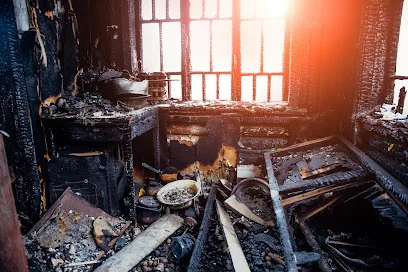
Mold remediation rarely comes down to scrubbing visible growth. In Rochester homes, the pattern is usually the same: water damage (from a leak, a backup, or a flood) creates a damp environment, and mold becomes the outcome. Rochester Restoration lists water and mold remediation services for Rochester, NY, and their site highlights 24/7 emergency restoration and an emphasis on water/fire/mold cleanup and reconstruction. But before you approve any job, you still need project-specific answers—because containment, drying, and verification are what make the remediation “finished,” not just “started.”
If you’re contacting Rochester Restoration, use their public signals—like the Rochester address and the listed mold remediation contracting details—as a starting point for a smarter provider conversation. Then demand job-specific documentation that maps to your home’s actual moisture pathway.
Start with the water damage pathway (not the spots you can see)
Ask the contractor to explain what caused the dampness and where the moisture traveled. Rochester Restoration’s website describes handling water damage and mold remediation, including emergency response. For your job, push for a clear chain of reasoning: what was wet, how long it likely stayed wet, and why the mold is appearing where it is.
Concrete detail matters. Rochester Restoration lists their contact address as 1144 Lexington Ave Unit 2, Rochester, NY 14606, and a phone number at +1 585-366-8976. During your first call, you should be able to repeat back the moisture source and affected materials after the technician’s walkthrough—otherwise the estimate may drift into guesswork.
Confirm that containment matches your layout and affected materials
Containment is often described broadly (“we’ll contain the area”), but you need it tied to your rooms and materials. Ask how they will separate work zones (for example, dust control at demolition boundaries) and how they will prevent cross-contamination to hallways, HVAC pathways, or adjacent rooms.
Also ask what they plan to do with porous materials. Mold remediation frequently involves deciding whether to remediate or remove materials such as drywall, insulation, or flooring components. A credible plan should match what’s actually contaminated—not a one-size approach.
Demand a documented drying and verification plan
The remediation is not complete when the visible mold is gone. It’s complete when the drying targets are achieved and verified for the specific affected assemblies. Rochester Restoration’s public messaging emphasizes restoration phases from cleanup through reconstruction, but your question should be narrower: what drying method will they use, what measurements will they track, and how will they document verification before closing up?
During the walkthrough, ask for the measurement approach (e.g., what drying metrics they monitor), what baseline conditions they establish, and when the team revisits to confirm the property is ready for the next phase. If they can’t explain how they determine “dry,” you may be paying for work that looks clean but doesn’t stop moisture-driven recurrence.
Clarify scope boundaries: demolition, sanitizing, and reconstruction sequencing
From a homeowner perspective, mold remediation scope is a sequence: stabilization, controlled removal (if needed), drying/verification, then repair. Rochester Restoration’s site mentions services like cleaning/restoration and reconstruction, which is helpful, but scope boundaries still must be explicit in writing.
Ask what gets removed, what gets remediated in place, and how they prevent moisture from returning during reconstruction. Request a timeline that explains how the drying verification connects to the demolition and rebuild steps. The goal is to avoid reopening walls or redoing finished work because the remediation “phase” ended too early.
How to evaluate Rochester Restoration’s readiness for your specific case
Rochester Restoration lists a New York State Licensed and Certified Mold Remediation Contractor (License # 01749) on its website, and they describe themselves as experienced in water, fire, and mold restoration. Those are meaningful starting signals, but you should still evaluate readiness with concrete questions:
- Will the technician document the moisture source and affected materials before proposing removal?
- Does the containment plan describe dust/migration control based on your actual rooms?
- What drying targets and verification steps will they record before repairs?
- Can they explain the sequencing from emergency response through cleanup and reconstruction in your scenario?
If the answers are specific and match your walkthrough notes, you’re more likely to hire a team that treats remediation as a completed process—not a visible cleanup.
For Rochester homeowners dealing with water damage–driven mold, your best “decision guide” is documentation tied to your moisture pathway: containment that fits the layout, drying that’s verified for the affected assemblies, and a scope that sequences removal and reconstruction appropriately. Use Rochester Restoration’s public information as your baseline, then insist on the job-specific details before work begins.
More field postings
- Property Recovery 911 in Philadelphia: Decide Between a Mold Report and Remediation Property Recovery 911 lists mold remediation and water mitigation in Philadelphia. Use this guide to define whether the next decision is ins…
- DryDocs Restoration in Philadelphia: Connect Water Damage to Mold Remediation Scope DryDocs lists water extraction, structural drying, water damage restoration, and mold remediation. Use those service signals to clarify wher…
- MSR Restoration in Philadelphia: Prepare for a Mold Inspection Report Use MSR Restoration’s published inspection and remediation sequence to prepare a useful mold assessment, understand its limits, and decide w…