Home Field postings Mold Remediation Guides
Warwick Mold Remediation Decisions: Confirm Moisture Mapping, Containment, and Drying Proof
Before cleanup after water damage, ask Warwick’s Rhode Island Restoration for documented moisture mapping, a containment plan, and drying proof.
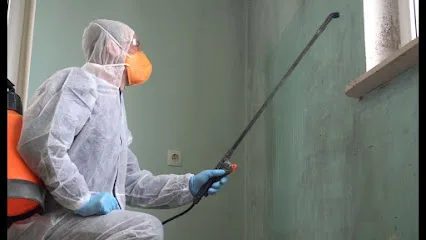
Mold remediation in Warwick, Rhode Island is rarely just a matter of removing what you can see. When mold shows up after a leak, storm, or flooding event, the remediation plan should start with proving where moisture went, stopping it, and then cleaning and containing affected materials while the home dries.
Rhode Island Restoration describes services that include water damage restoration and “environmental mold remediation,” with restoration workflow elements such as moisture mapping, drying, and dehumidification. Use those published service themes to guide your questions so the scope you approve matches the cause and the building materials that need protection.
Moisture mapping first: the decision that drives everything else
In water-damage/mold scenarios, visible growth patterns are clues—but they aren’t the decision maker. The key decision is whether your contractor can explain the moisture path and provide evidence tied to the rooms and materials that were affected.
Rhode Island Restoration’s Warwick/Wakefield page references moisture mapping and drying as part of water restoration steps. Ask how moisture mapping will be documented room-by-room, what that documentation covers (drywall, subfloor, insulation, and similar materials), and how they define which areas are included in remediation versus not included.
If the project plan can’t connect the remediation boundary to documented moisture evidence, you risk paying for cosmetic cleaning while hidden moisture remains in building materials.
Containment for your layout, not a one-size-fits-all demo
Mold can spread when cleanup isn’t controlled, especially when airflow moves from the work zone into other parts of the home. Containment should be treated as a designed plan that fits your specific layout, not just plastic sheeting.
Rhode Island Restoration is associated with environmental restoration services that include mold remediation. That framing can be a practical prompt to confirm details: where containment will be set up inside your home, how technicians will manage airflow into and out of the work area, and whether the scope describes the protective equipment and cleaning procedures intended for your situation.
Clear containment planning matters because it’s one of the main ways remediation stays contained while affected materials are cleaned and removed within the work zone.
Separate mold removal from the proof that drying is complete
A common problem is assuming that “removal and cleaning” automatically means the property is dry enough to close. A better workflow keeps phases distinct: mitigation, removal/cleaning within containment, active drying, and then closure based on objective results.
Because Rhode Island Restoration’s service descriptions emphasize drying and dehumidification as part of restoration, your closure should be tied to what “dry” means for your case. Ask which readings or measurements are used, from which materials, and how long the home remains under monitoring before the project is considered complete.
When closure is supported by documentation, you’re less likely to repeat the same remediation cycle due to moisture that was never fully addressed.
When water damage triggers mold, confirm the scope sequence
If mold followed a water event, remediation scope can extend beyond visible surfaces. In many situations, the work sequence includes earlier water-damage steps such as mitigation and drying of structural materials before demolition or reconstruction decisions are made.
Even if you’re primarily requesting “mold remediation,” ask Rhode Island Restoration how they separate immediate mitigation (to stop further damage) from later stages such as cleanup/remediation and rebuilding decisions. That sequence helps prevent scope gaps where one party removes growth while another later discovers materials that were never properly dried.
Safety practices and documentation you should expect in writing
Mold remediation should be safety-driven work with clear communication and documentation. Before approving anything, request a written scope that identifies the affected areas, the containment approach, cleaning/removal methods, and how drying verification will be handled before the project is considered complete.
For reference, Rhode Island Restoration lists an office location and contact details including 641 Bald Hill Rd suite 1, Warwick, RI 02886, a phone number of +1 401-266-3829, and a Warwick page on rirestoration.com (https://rirestoration.com/wakefield-ri/?utm_source=google&utm_medium=organic&utm_campaign=gmb&utm_content=gmb&utm_content=warwick). Use these to confirm you’re reviewing the correct Warwick service record, then use your questions to confirm evidence-based scope and closure criteria.
Get the decision points answered before cleanup starts
In your first conversation, aim to get answers that reduce uncertainty: What documented moisture source and moisture path will be used? How will containment be designed for your layout and airflow? What drying proof will be used before closure? And—when water damage is the trigger—which steps are included in the workflow from mitigation through remediation decisions?
If Rhode Island Restoration can explain these decision points with room-specific documentation and a phase-by-phase workflow, you’ll be better positioned to choose mold remediation that addresses the underlying moisture problem—not only the surface signs.
More field postings
- Property Recovery 911 in Philadelphia: Decide Between a Mold Report and Remediation Property Recovery 911 lists mold remediation and water mitigation in Philadelphia. Use this guide to define whether the next decision is ins…
- DryDocs Restoration in Philadelphia: Connect Water Damage to Mold Remediation Scope DryDocs lists water extraction, structural drying, water damage restoration, and mold remediation. Use those service signals to clarify wher…
- MSR Restoration in Philadelphia: Prepare for a Mold Inspection Report Use MSR Restoration’s published inspection and remediation sequence to prepare a useful mold assessment, understand its limits, and decide w…