Home Field postings Guides
When sandy soil under Gravesend houses traps moisture: Crown Mold Specialists' basement playbook
Crown Mold Specialists operates from 490 Kings Hwy in Gravesend, a Brooklyn neighborhood where sandy soil and a near-sea-level water table create a basement humidity problem most inland remediation playbooks were not written for.
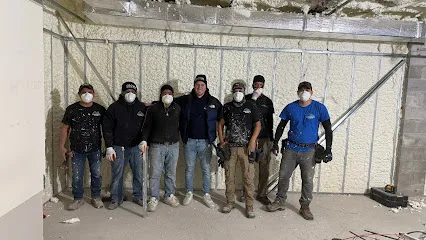
Crown Mold Specialists files its address as 490 Kings Hwy, Brooklyn, NY 11223 — the Gravesend stretch of Kings Highway, west of McDonald Ave and a short walk from the Belt Parkway. The base matters here for a soil reason: Gravesend, Bensonhurst, and the southern edge of Bensonhurst share a sandy infill subsoil sitting on a water table that is only a few feet below the basement floor slab in many lots. That geology produces a specific mold problem that an inland-Brooklyn or Manhattan playbook handles poorly.
Sandy-soil basements transfer moisture through the slab and cove joint, not just through wall cracks.
The soil–slab–wall problem
In Gravesend the slow case is the most common case. Water moves up through the basement slab as vapor, condenses on the underside of finishing materials, and produces mold on the back face of paneling, behind vinyl wall base, and inside fiber batt insulation. There is rarely a single visible leak. The slab-edge cove joint between floor and wall is the failure point that most inland-trained crews underweight; treating that joint properly often makes the difference between a permanent fix and a 12-month recurrence.
What a Gravesend-aware scope includes
A scope written for this soil profile usually has four parts that an inland scope skips: a slab moisture-emission read using a calcium-chloride or relative-humidity in-slab probe, an assessment of the cove joint at the wall–slab transition, a recommendation on whether interior cove drain plus sump is needed before finishing the basement again, and a vapor barrier specification under any new flooring. A scope that proposes drywall replacement without addressing the vapor pathway is rewriting the problem rather than fixing it.
Calling: what the intake should sound like
The listed number is +1 347-203-7731. A useful intake call for a Gravesend home walks through three questions before booking the visit: when does the basement smell worst (after rain, in summer humidity, year-round), is there ever standing water at the floor edges, and what is currently on the floor — bare slab, tile, vinyl, or wood. Those three answers steer the inspector to bring the right meters and the right sample bags.
The recurrence trap
Sandy-soil basements that have been remediated once and finished again without correcting the slab vapor source typically show recurrence in 12 to 18 months. The new mold appears on different surfaces than the first round — behind the bottom plate of new framing, inside the insulation of newly installed walls. Asking a prospective crew how they handle the source side of the problem, not just the visible side, separates outfits that have done this corridor before from ones following an inland playbook.
Getting to 490 Kings Hwy
Kings Highway at 490 is one block from the Kings Highway F/Q train hub and about four blocks from Avenue P and Coney Island Ave. Visitors arriving by car will use the Belt Parkway Exit 6 (Bay Parkway) or Exit 7 (Ocean Parkway). Metered street parking is achievable mid-day on the side blocks; Kings Highway itself runs commercial loading and is harder.
More field postings
- SOS Mold Removal Queens: what to verify before authorizing mold inspection and cleanup in Flushing Before mold work starts in Queens, confirm the moisture source, documentation approach, and containment plan. Here’s how to prepare with SOS…
- Mr Mold Williamsburg: confirm containment, moisture source, and documentation before work begins Before mold remediation or water-damage restoration starts, confirm the moisture-source plan, written containment boundaries, and documentat…
- After a Brooklyn leak: verify water mitigation, drying, and mold cleanup scope (with final inspection evidence) Hidden moisture turns leaks into mold risk. Use this Brooklyn-focused guide to verify the mitigation steps, equipment, and final inspection …