Home Field postings Guides
How to Prepare for Mold & Water Damage Remediation in Brooklyn: A Documentation-First Checklist for Choice Mold Removal
Choice Mold Removal & Water Damage Restoration in Brooklyn, NY supports mold and water-damage remediation centered on documentation, safety signals, and post-work verification. Located at 700 Columbia St, the team can be reached at +1 212-381-6196.
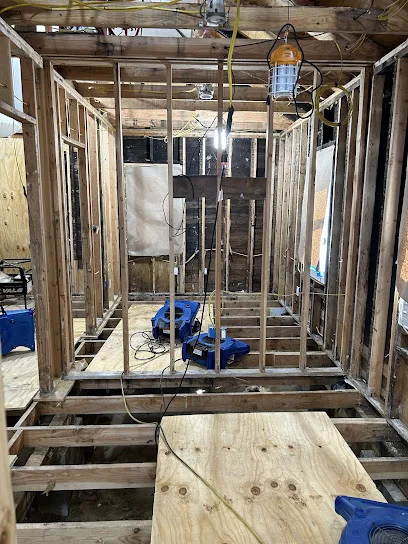
Mold and water damage projects fail most often for two reasons: the moisture source is not fully identified, and the cleanup work is not verified with usable documentation. For a Brooklyn brownstone, converted loft, or cellar apartment, that means the remediation plan has to connect the cause of the leak to containment choices, drying, and final clearance checks.
Choice Mold Removal & Water Damage Restoration is an independent provider in Brooklyn with a published address at 700 Columbia St, Brooklyn, NY 11231, United States and a contact line at +1 212-381-6196. Its public-facing focus pairs water-damage restoration with mold remediation workflows, which makes it a useful fit when homeowners need a clear record of what was assessed, what was contained, and what was resolved.
Start with the moisture source, not the visible staining
Even when staining looks contained to one room, the moisture driver can be hidden: roof-tar leaks, old drain issues, or water tracking across party-wall boundaries. Before cleanup discussions turn into demolition proposals, the remediation team should map likely origins and confirm which ones match observations.
In practice, the documentation you want is straightforward: what area was evaluated, what conditions were measured or photographed, and how the crew tied the findings to the remediation scope. This is where “documentation-first” preparation saves time later—because it reduces guesswork about what actually needs containment and drying.
The safety signal to look for: containment that protects adjacent spaces
Water damage remediation tied to mold concerns depends on containment and protective equipment, especially in multi-room layouts common in Brooklyn properties. Containment choices determine whether spores or particulate are restrained during removal and whether clean and work zones are meaningfully separated.
On the service signals side, this listing surfaces a set of indicators that align with the containment mindset, including inspection report, safety equipment, and containment. Those items are useful as “prep prompts” when calling for an assessment: ask how the crew plans to isolate the work area and what evidence will be left behind to document that approach.
What to request from the inspection report before authorizing work
Homeowners don’t need a technical manual, but they do need an inspection record they can reference. Before agreeing to demolition or drying timelines, ask for a copy of the inspection report (or written summary) that lists the findings by location and the reasoning behind the remediation scope.
For this Brooklyn provider, public-source signals include IICRC certified as well as documentation elements like an inspection report. When present, those signals support the idea that the plan should be traceable: what was found, where it was found, and what remediation steps follow from it.
Drying and verification: the part that affects whether problems return
Water-damage remediation is not just removal. It is also drying, stabilization, and verification. That verification step matters because materials can look “dry enough” while still holding moisture in concealed layers.
Request clarity on how drying will be monitored and when the team considers the area ready for post-remediation evaluation. A good workflow connects drying metrics and practical checks to the final “what changed” record, so that clearance decisions are anchored to facts rather than impressions.
Post-job proof: how to confirm health-related issues are resolved
When the job involves health-related mold concerns, post-work verification should be more than a final walkthrough. The documentation should explain what was resolved and what remained out of scope, along with how the project limits were defined in the first place.
This is also where the homeowner’s prep pays off: keep a timeline (when the leak began, what was shut off, what was removed, and when drying started). That timeline gives the provider the context needed to reconcile the original cause with the final remediation outcome.
Quick call checklist for Brooklyn homeowners (before scheduling)
- Share the suspected moisture source (roof, plumbing, drain, tracking pattern) and the approximate start date.
- Ask whether the team can provide an inspection report summary tied to the proposed scope.
- Confirm containment plan details: how work zones are isolated and how cleanup boundaries are protected.
- Request how drying will be monitored and what “ready for verification” means in measurable terms.
- Ask what documentation will be provided after the work—so the homeowner has a reference for future insurance or contractor coordination.
For contact and location details, Choice Mold Removal & Water Damage Restoration can be reached via its published information: +1 212-381-6196 and the official site at https://choicemoldremovalnyc.com/contact/. The address on file is 700 Columbia St in Brooklyn, NY.
More field postings
- SOS Mold Removal Queens: what to verify before authorizing mold inspection and cleanup in Flushing Before mold work starts in Queens, confirm the moisture source, documentation approach, and containment plan. Here’s how to prepare with SOS…
- Mr Mold Williamsburg: confirm containment, moisture source, and documentation before work begins Before mold remediation or water-damage restoration starts, confirm the moisture-source plan, written containment boundaries, and documentat…
- After a Brooklyn leak: verify water mitigation, drying, and mold cleanup scope (with final inspection evidence) Hidden moisture turns leaks into mold risk. Use this Brooklyn-focused guide to verify the mitigation steps, equipment, and final inspection …